5.25.2014

A Case for the Ethicality of Co-resolution

I would like to take a moment (that coincidentally falls right after the moment that I completed a letter requesting an advisory opinion from the Ohio Supreme Court Board of Commissioners on Grievances and Discipline concerning the ethicality of co-resolution) to make a thoroughly-researched case for the ethicality of co-resolution.

The short version is that co-resolution is not the unauthorized practice of law and co-resolvers are not acting as attorneys.  The long version is as follows:


I.                   The Right to Choose an Alternative to Litigation and Legal Assistance

First, it must be noted that parties have the right to mutually choose the process (e.g., facilitated negotiation, arbitration, litigation) by which they handle their dispute.  This means that parties have the right to not litigate their dispute and not approach attorneys.[1]  Judicial wisdom supports the right to avoid litigation,[2] and the Federal Arbitration Act (which is enacted verbatim in the Ohio Arbitration Act[3]) has allowed parties to enforce agreements to approach non-legal/non-court processes of dispute resolution.[4]  Taking a look beyond the quasi-judicial process of arbitration, the lack of definition of “arbitration” in the Federal Arbitration Act[5] has led courts to grant parties broad discretion in the procedures by which they handle their disputes without approaching courts or attorneys.[6]  To be clear, I am not arguing about the enforceability of an agreement to stay litigation and compel co-resolution—I am merely, pointing out that the law affords parties the ability to choose non-court/non-legal forums in handling their disputes.  However, going beyond the right to not litigate, the ABA Model Rules of Professional Conduct impose a duty on attorneys to inform clients of feasible alternatives to litigating their legal rights,[7] and “[s]everal jurisdictions encourage, but do not require, lawyers to inform clients of ADR options.”[8]  Thus, if both parties agree to forgo litigation and legal assistance, they may temporarily “contain” their dispute in an alternative process to litigation.
The key result of this right to not litigate is that parties to a dispute have the right to choose between bringing either attorneys or non-attorney advocates to the negotiation table in these contained or mutually-agreed-to processes. Tried and true examples of non-attorney advocates chosen over attorneys in resolving disputes include union representatives,[9] financial experts hired as representatives in securities disputes,[10] sports agents,[11] and lay advocates in administrative hearings concerning welfare benefits,[12] Social Security applications,[13] and others.[14]  Even in active court cases, parties can avoid legal expenses by agreeing to employ CASA advocates, instead of attorney Guardians ad Litem, to act as advocates in the litigation process.[15] 
Access to non-legal advocates does not equate to a diminution of justice in the system.  Parties who have access to lay advocates have, in some studies, expressed greater satisfaction with their non-attorney advocates than similarly-situated parties did of their attorney advocates.[16]  Non-attorney advocates can use expertise in areas other than legal knowledge during a negotiation[17] and can be more accessible to parties who cannot afford the assistance of a legally trained and licensed attorney.[18]
Co-resolution applies this concept by offering communication, coaching, and cooperative negotiation skills as the substantive area of expertise of the non-attorney advocates.

II.                Conflict Coaching and Ethical Concerns with Non-Attorney Negotiators

Co-resolution provides each disputant with a cooperative “conflict coach” to directly assist them in the negotiation.[19]  Conflict coaching is “a one-on-one process in which a trained coach helps individuals gain increased competence and confidence to manage and engage in their interpersonal conflicts and disputes.”[20]  This process emerged in the 1990s from the fields of alternative dispute resolution and executive coaching[21] and tends to promote the cooperative approach to resolving disputes that is described in such books as Getting to Yes.[22]  Some have argued, because both law-focused attorneys and communication-focused non-attorneys each offer unique benefits in a cooperative, non-legal negotiation forum such as mediation,[23] that ethical rules concerning the unauthorized practice of law should be modified to allow for the direct assistance of either attorneys or non-attorneys.[24]
However, because conflict coaches hold themselves out as negotiation assistants, if they operated independently and sat at the table during a negotiation it might create ethical concerns with the unauthorized practice of law.[25]  While this concern has not been explored in the literature or the case law, problems may arise when the non-attorney conflict coach directly assists a party in negotiating a pending legal action against an attorney.
Consider a situation in which one party to a pending legal action hires a non-attorney conflict coach to provide one-on-one assistance in negotiating cooperatively and the other party hires an attorney.  The disputant with the cooperative, non-attorney conflict coach may be at a disadvantage in the negotiation because the party with the attorney would be able to use competitive negotiation tactics to take advantage of cooperative negotiation behavior and would be able to offer a one-sided perspective on how the court would handle the case if resolution was not reached.  This concern appears to be pinpointed by Ohio case law on the subject.
The Ohio Supreme Court has defined the practice of law as “(1) legal advice and instructions to clients advising them of their rights and obligations; (2) preparation of documents for clients, which requires legal knowledge not possessed by an ordinary layman; and (3) appearing for clients in public tribunals and assisting in the interpretation and enforcement of law, where such tribunals have the power and authority to determine rights of life, liberty, and property according to law.”[26]  While the Court initially held that the practice of law is not limited to appearance at court,[27] when a district court applied this ruling to define the practice of law as “all advice to clients and all action taken for them in matters connected with the law,” the Ohio Supreme Court overruled this as being an overbroad definition of the practice of law.[28]
In dealing with non-attorneys engaging in the unauthorized practice of law by assisting or participating in negotiations, the Ohio Supreme Court has found such violations when a person, on behalf of another and without the consent of both parties, contacted the opposing party with a letter that implied a discrimination claim, threatened legal action, and offered a $200,000.00 settlement.[29]  Obviously, evaluation of legal rights and the dollar value of a potential court case are actions that should only be conducted by attorneys.  The Ohio Supreme Court has cited this case, stating “[w]e have repeatedly held that nonlawyers engage in the unauthorized practice of law by attempting to represent the legal interests of others and advise them of their legal rights during settlement negotiations,”[30] in addressing situations in which non-attorneys negotiate directly against attorneys[31] or negotiate pending litigation against the other party directly.[32]
The common thread in these cases (and the key distinction between these cases and the fully-legal and common non-attorney advocates described in the previous section[33]) is that the non-attorneys who were found in violation of UPL statutes were acting alone and outside of a defined process that is “contained” from court-involvement, such as mediation, arbitration, or administrative hearings.  Outside of defined processes such as mediation and arbitration, “which clearly represent a track apart from the traditional litigation route, negotiation remains for many nothing more than a component of the litigation process.”[34]  Out in the open, litigation is a possibility looming over negotiations and, therefore, non-attorneys may end up negotiating against attorneys.
The purpose of unauthorized practice of law statutes is to protect the public from unskilled legal advice, not to limit the type of advocacy that parties can mutually choose.[35]  So long as both parties agree to the process, the situation becomes akin to mediation and arbitration and less akin to one person operating an “advocacy” service.
Thus, a conflict coach who is operating independently of a defined system may face unauthorized practice of law issues.  But this does not mean that the direct assistance in cooperative communication and negotiation skills, offered by conflict coaches, is a benefit that is beyond the reach of opposing parties who both want it.

III.             Co-resolution as an Ethical Process for Non-Attorney Negotiation Assistance

Co-resolution addresses these potential ethical issues by providing each party to the dispute with a conflict coach and defining the process as a contained, separate dispute resolution process.
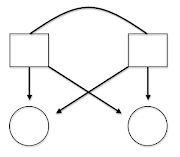
First introduced in 2008, co-resolution is a facilitated negotiation process in which two dispute resolution professionals operate as a single service and act as a team of coaches, each assisting one disputant in negotiating under their interests.[36]  Parties approach this process together, participate voluntarily, and, afterwards, are free to pursue legal or other non-legal processes if desired.  Both coaches (“co-resolvers”) make it explicitly clear that they are not acting as attorneys and are only assisting in cooperative negotiation and communication techniques as they facilitate a resolution to the dispute.  Co-resolvers do not offer legal advice and direct the parties to consult with attorneys if they ask questions regarding their legal rights.
Thus, all of the rules that apply to mediation as a process for facilitated negotiation also apply to co-resolution.  For example:
1.      The parties must both agree to engage the process—neither side is able to compel the other into participating against their will;
2.      Participation is voluntarily and either party is free to discontinue the process (disengaging both coaches) at any time;
3.      The coaches only facilitate communication, and the parties maintain self-determination over the outcome;
4.      The coaches do not offer or provide legal advice;
5.      The coaches (like mediators) can be attorneys or non-attorneys, however, within the process they are not acting as attorneys;
6.      Each party can bring an attorney to provide legal advice during the process;
7.      The process ends when the parties reach an agreement or an impasse.
However, unlike mediation, the co-resolvers are not neutral—each one assists one party in negotiating a resolution of the dispute.
The unique benefit that co-resolution offers over other forms of negotiation-advocacy is that, because the co-resolvers act as an ongoing team within a contained process, each co-resolver is able to know that the opposing co-resolver will only support cooperative negotiation strategies.  This dynamic is the result of cooperation-inducing forces described in game theory and studies of negotiation.
First, game theory (“the study of mathematical models of conflict and cooperation between intelligent rational decision-makers”[37]) has shown that rational decision-makers will compete (seek an individual advantage) rather than cooperate (seek mutual benefit) in a single interaction.[38]  This dynamic occurs because each knows that competition garners marginal gains over attempting to cooperate.  Furthermore, each knows that the other side is operating under similar incentives to compete and must therefore compete to protect themselves from the other side’s competitive moves.  For example, consider attorneys who can either act as tough competitors or conciliatory cooperators: because each attorney operates independently (is chosen by one party), each attorney is under incentive to present themselves as a tough competitor and each party is under incentive to hire a tough attorney (for fear of what kind of attorney the other side will hire).[39]
On the other hand, if the decision-makers were to interact on an indefinitely repeating basis, both would seek to cooperate.[40]  The reason for this is that repeated cooperation (where both receive a mutually-acceptable outcome) will, over time, garner a greater outcome for each individual than repeated competition (where both parties attempt to undermine each other and end up with either a limited outcome or no outcome at all).  The power of future interaction is visible in the legal field.  As attorneys (independent advocates hired separately on a case-by-case basis) became more numerous over the past half-century, causing them to interact less frequently, their competitiveness has increased and their civility has decreased to the point of “crisis.”[41]  However, in situations where attorneys interact frequently—such as small towns,[42] small pools of public defenders and prosecutors,[43] and practice groups of collaborative lawyers[44]—cooperation and civility are enforced and protected through the advocates’ ongoing working relationship with each other.  As a result, the ongoing interaction between the co-resolvers should, in theory, keep their negotiation behavior and coaching efforts cooperative.
Next, studies of negotiation and dispute resolution have confirmed the real-world power of these strategic theories.  In informal negotiation, where there are no rules or oversight that can curb competition, the above-described game-theory pressures towards competition in a single negotiation are especially prominent.[45]  Studies have shown that, as independent advocates, attorneys are especially prone to engage in deception in settlement negotiation.[46]  However, repeated interactions between the same players have been shown to produce cooperation by “cast[ing] a shadow back upon the present and thereby affect[ing] the current strategic situation.”[47]  Supported by psychological studies of negotiation behavior, this is the reason that “[s]avvy negotiators expend time and effort to build a positive personal relationship with their opponents because such relationships can pay dividends.”[48]  The ongoing relationship and the negotiation rapport between the co-resolvers should therefore contribute to smooth interactions and amicable coaching efforts.
Thus, because co-resolvers operate through an ongoing working relationship, the assistance they provide to opposing parties is cooperative in nature—the repeated interaction between the co-resolvers motivates cooperative behavior, and each party can know that the opposing co-resolver will only assist the opposing party in cooperative negotiation behavior.  This dynamic of reliable cooperation has been demonstrated through participant surveys and anecdotal observations gathered in co-resolution pilot projects in the United States and Canada, strongly indicating that parties felt loyally supported in a cooperative negotiation environment.[49]
However, more important to the point of this letter, the insulating effect of the co-resolution process allows the co-resolvers to serve as conflict coaches without drawing concerns relating to the unauthorized practice of law.  Once again, like mediation, co-resolution is a defined, voluntary process.  The parties approach it together (each desiring to have the benefit of a negotiation coach and to work across from a cooperative opposing coach), participate voluntarily, and either reach agreement or impasse.  The co-resolvers individually assist their respective parties in communicating and negotiating effectively while also acting as a team in guiding both parties toward a mutual resolution.  Because the co-resolvers operate within a defined process, in which both parties agree to participate, there is no danger that a co-resolver will act as an attorney, operating independently and conducting settlement negotiations against an actual attorney under pending litigation.[50]
Furthermore, parties to co-resolution, like participants in mediation, operate apart from the exercise of their legal rights[51] but do not fully give up these rights.[52]  Within the facilitated negotiation of mediation or co-resolution, the parties are able to exercise self-determination and define their own agreement rather than choosing from options that would be imposed by a court.[53]  However, these parties are also free to walk away from the process, take agreements to independent attorneys for approval, and proceed to litigation if they so desire—therefore, they never give up legal rights or legal assistance by participating in co-resolution.  But, instead of relying on the parties to understand and exercise their access to attorneys and the courts, co-resolvers explain that the process is voluntary and that either party can terminate the process at any time.[54]  Regardless, parties who reach out-of-court agreement—either through co-resolution, mediation, or settlement negotiations facilitated by independent attorneys—forgo their legal rights to some degree but apparently value this decision over the uncertainty of a judicial determination of their case.[55]  Furthermore, the courts have recognized a strong public policy that favors settling cases efficiently to avoid prohibitive legal fees for the parties.[56]
Skeptics of co-resolution may see two coaches sitting next to separate parties, assisting them in discussing and negotiating their dispute, and improperly label the process as the unauthorized practice of law or a violation of legal ethics.  However, doing so would ignore the plethora of non-attorneys who assist, negotiation, and advocate for parties, affecting potential legal rights in many fields and, yet, operating outside of potential court involvement.[57]
The key to keeping non-attorney advocates ethical is containing or proscribing their assistance away from pending litigation—so long as the non-attorney advocates are operating in a defined process, they are not in danger of taking the role of legal advocate.  Co-resolution is a defined process, mutually undertaken by both parties like mediation and arbitration, and also like mediation and arbitration, it is clearly separate and apart from the litigation process.[58]
In conclusion, the conflict coaches who assist the parties in communication and negotiation within the co-resolution process are not acting as attorneys and should not be in violation of legal ethics rules or unauthorized practice of law statutes.


[1] Blinco v. Green Tree Serv., Inc., 366 F.3d 1249, 1252 (11th Cir. 2004) (citing , Mitchell v. Forsyth, 472 U.S. 511, 526 (1985) (“The arbitrability of a dispute similarly gives the party moving to enforce an arbitration provision a right not to litigate the dispute in a court and bear the associated burdens”).
[2] See Hon. Ron Spears, Lincoln Warnings: ‘You Have the Right to Avoid Litigation…’, 94 Ill. B.J. 438 (2006).
[3] Ohio Rev. Code Ann. §§ 2711.01-.24 (West 2008). The Ohio Arbitration Act applies to written contracts and expressly declares them “valid, irrevocable, and enforceable, except upon grounds that exist at law or in equity for the revocation of any contract.” § 2711(A). This language is exactly the same as the language in the FAA. See 9 U.S.C.A. § 2 (West 2008).
[4] United Steelworkers of Am. v. Warrior & Gulf Navigation Co., 363 U.S. 574 (1960) (ruling that a federal court may compel an employer to submit a union's grievance to arbitration); United Steelworkers of Am. v. Am. Mfg. Co., 363 U.S. 564 (1960); United Steelworkers of Am. v. Enter. Wheel & Car Corp., 363 U.S. 593 (1960).  Like the Federal Arbitration Act, the Ohio Arbitration Act has similarly been interpreted to create a presumption of validity regarding the enforceability of written contracts containing arbitration agreements. OHCONSL § 21:3.  For Ohio case law, see Maestle v. Best Buy Co., (2003) 100 Ohio St.3d 330, 334 800 N.E.2d 7 (“We hold that a trial court considering whether to grant a motion to stay proceedings pending arbitration filed under R.C. 2711.02 need not hold a hearing pursuant to R.C. 2711.03 when the motion is not based on R.C. 2711.03.”), and describing the strong public policy favoring arbitration/mediation alternatives to the courts, see Williams v. Aetna Fin. Co., 83 Ohio St.3d 464, 471, 700 N.E.2d 859 (1998), ABM Farms, Inc. v. Woods, 81 Ohio St.3d 498, 500, 692 N.E.2d 574 (1998). Where there are doubts regarding the application of an arbitration clause, such doubts should be construed in favor of arbitrability. Council of Smaller Enterprises v. Gates, McDonald & Co., 80 Ohio St.3d 661, 666, 687 N.E.2d 1352 (1998)
[5] Thomas J. Stipanowich, The Arbitration Penumbra: Arbitration Law and the Rapidly Changing Landscape of Dispute Resolution, 8 Nev. L.J. 427, 434-435 (noting “the silence of the FAA and UAA regarding the definition of arbitration, coupled with the fact that federal and state statutes establish no formal requirement that arbitration agreements be explicitly identified as such…”).
[6] Salt Lake Tribune Publ'g Co. v. Mgmt. Planning, Inc., 390 F.3d 684, 690 (10th Cir. 2004) (“Parties need not establish quasi-judicial proceedings resolving their disputes to gain the protections of the FAA, but may choose from a broad range of procedures and tailor arbitration to suit their peculiar circumstances.”).
[7] Model Rules of Prof’l Conduct R. 2.1 cmt. (1983) (stating that “when a matter is likely to involve litigation, it may be necessary under Rule 1.4 to inform the client of forms of dispute resolution that might constitute reasonable alternatives to litigation”).
[8] Robert F. Cochran Jr., Professional Rules and Adr: Control of Alternative Dispute Resolution Under the ABA Ethics 2000 Commission Proposal and Other Professional Responsibility Standards, 28 Fordham Urb. L.J. 895, 904 (2001)
[9] Lisa B. Bingham et al., Exploring the Role of Representation in Employment Mediation at the USPS, 17 Ohio St. J. on Disp. Resol. 341, 359, 363-66 (2001) (presenting surveys of mediation participants who were unrepresented, represented by an attorney, represented by a fellow employee, or represented by a union representative).
[10] Justine P. Klein, Non-Attorney Representation, 63 Fordham L. Rev. 1605, 1608 (stating “They also took the position that non-attorney representatives took these cases at a cost that was less than that which would be charged by lawyers. They also made the argument that because a number of non-attorney representatives were former securities industry people, they provided a level of expertise that a customer doesn't always get when retaining a lawyer  . . . It is clear that these non-attorney representatives do provide some access and they do provide a freedom of choice.”).
[11] Stacey B. Evans, Sports Agents: Ethical Representatives or Overly Aggressive Adversaries?, 17 Vill. Sports & Ent. L.J. 91 (2010) (“Degree Directory defines a sports agent as someone who “handles contract negotiations, public relations issues and finances, and he or she will often procure additional sources of income for the athlete (such as endorsements).”).
[12] See Earl Johnson, Jr., Justice for America's Poor in the Year 2020: Some Possibilities Based on Experiences Here and Abroad, 58 DePaul L. Rev. 393, 416-417 (2009).
[13] Drew A. Swank, Non-Attorney Social Security Disability Representatives and the Unauthorized Practice of Law, 36 S. Ill. U. L.J. 223, 224 (2012) (“Before the Social Security Administration, Bob's actions are not only completely legal, they are a common, everyday occurrence for approximately five thousand  non-attorney representatives.”).
[14] Id. at 234 (“As administrative agencies were designed without the formalities and rules of the courts, they were ideally suited for non-attorney representatives. As the number of administrative agencies increased, so too did the opportunities for non-attorneys to practice law. Historically, non-attorneys have routinely appeared before certain federal administrative agencies.”).
[15] Gerard F. Glynn, The Child Abuse Prevention and Treatment Act-Promoting the Unauthorized Practice of Law, 9 J. L. & Fam. Stud. 53, 74 (2007) (“The non-lawyer advocate can provide the investigation, monitoring and follow-up that lawyers do not have the time or receive adequate pay to do…”).
[16] Bingham et al., supra note 9, at 364-71.
[17] Herbert M. Kritzer, Legal Advocacy: Lawyers and Nonlawyers at Work 77, 111-49 (1998) (noting that “formal training (in the law) is less crucial than is day-to-day experience in the unemployment compensation setting”); see also Russell Engler, Connecting Self-Representation to Civil Gideon: What Existing Data Reveal About When Counsel is Most Needed, 37 Fordham Urb. L.J. 37, 38 (2010), at 3, 47-48 (noting importance of not just any advocate, but an advocate with specialized expertise).
[18] Kay Hennessy Seven and Perry A. Zirkel, In the Matter of Arons: Construction of the Idea's Lay Advocate Provision Too Narrow?, 9 Geo. J. on Poverty L. & Pol'y 193 (2002) (“Non-attorneys or lay advocates with specialized knowledge can facilitate access to the legal system for parties with restricted financial means who do not have the legal skill or knowledge to represent themselves.”); see generally Marcus J. Lock, Increasing Access to Justice: Expanding the Role of Nonlawyers in the Delivery of Legal Service to Low-Income Coloradans, 72 U. Colo. L. Rev. 459 (2001); Alex J. Hurder, Nonlawyer Legal Assistance and Access to Justice, 67 Fordham L. Rev. 2241 (1999)
[19] See Nathan Witkin, Co-resolution: A Cooperative Structure for Dispute Resolution, 26 Conflict Resol. Q., 239 (2008).
[20] Cinnie Noble, Conflict Management Coaching: The CINERGY Model 12 (2012); see also Tricia S. Jones and Ross Brinkert, Introducing the One-on-One Dispute Resolution Process Conflict Coaching: Conflict Management Strategies and Skills for the Individual (2008) (defining conflict coaching as “a process in which a coach and client communicate one-on-one for the purpose of developing the client's conflict-related understanding, interaction strategies and interaction skills.”); see also Ross Brinkert, ADR Plus One: Developing ADR Practice Through Coaching (May 2003), abridged version available at www. mediate. com; see also Cinnie Noble, Conflict Coaching: A Preventative Form of Dispute Resolution” (2002) and “Mindfulness in Conflict Coaching (2006), both available at www.mediate.com.
[21] Cindy Fazzi, Introducing . . ., 64 Disp. Resol. J. 90, 90.
[22] Roger Fisher and William Ury, Getting to Yes (2nd ed. 1991).
[23] Sida Liu, Beyond Global Convergence: Conflicts of Legitimacy in a Chinese Lower Court, 31 Law & Soc. Inquiry 75, 95 (2006) (observing that “skills required in mediation are no longer legal knowledge, but mostly interpersonal skills and familiarity with the customs of the local community” or “nonlegal skills”).
[24] Jean R. Sternlight, Lawyerless Dispute Resolution: Rethinking A Paradigm, 37 Fordham Urb. L.J. 381, 411-12 (2010) (arguing that “the need for providing emotional support, self-agency, and an endorsement or reputational boost of the sort discussed by Sandefur may be just as great or even greater in mediation or arbitration than in litigation . . . [but that] . . . rather than assume that the substitution of non-attorney-representatives for attorneys makes more sense in ADR than in litigation, we should rethink the rules on unauthorized practice of law with respect to all forms of dispute resolution.”).
[25] Ohio Rev. Code Ann. §§4705.07(A): No person who is not licensed to practice law in this state shall do any of the following: (1) Hold that person out in any manner as an attorney at law; (2) Represent that person orally or in writing, directly or indirectly, as being authorized to practice law; (3) Commit any act that is prohibited by the supreme court as being the unauthorized practice of law.
[26] Worthington City School Dist. Bd. of Edn. v. Franklin Cty. Bd. of Revision, 85 Ohio St.3d 156, 707 N.E.2d 499, 503-504 (1999), citing Mahoning Cty. Bar Assn. v. The Senior Serv. Group, Inc. (Bd.Commrs.Unauth.Prac. 1994), 66 Ohio Misc.2d 48, 52, 642 N.E.2d 102, 104.
[27] Land Title Abstract & Trust Co. v. Dworken, 129 Ohio St. 23 (1934) (“The practice of law is not limited to the conduct of cases in court. It embraces the preparation of pleadings and other papers incident to actions and proceedings on behalf of clients before judges and courts…”).
[28] Dayton Bar Association v. Lender’s Services Inc., 40 Ohio St. 3d 96 (1988) (“the mere use of legal terms of art…does not, standing alone…constitute the practice of law”).
[29] Cleveland Bar Assn. v. Henley, 95 Ohio St.3d 91 (2002).
[30] Cincinnati Bar Assn. v. Foreclosure Solutions, L.L.C., 123 Ohio St.3d 107 (2009).
[31] Disciplinary Counsel v. Brown, 121 Ohio St.3d 423 (2009) (stating that “one who purports to negotiate legal claims on behalf of another and advises persons of their legal rights…engages in the practice of law”) (emphasis added).
[32] Cincinnati Bar Assn., 123 Ohio St.3d 107.
[33] See Section I., supra, footnotes 9-15
[34] Robert C. Bordone, Fitting the Ethics to the Forum: A Proposal for Process-Enabling Ethical Codes, 21 Ohio St. J. on Disp. Resol. 1, 13-14 (2005) (“Unlike arbitration and mediation, which clearly represent a track apart from the traditional litigation route, negotiation remains for many nothing more than a component of the litigation process.”).
[35] See In re Opinion No. 26 of the Comm. on the Unauthorized Practice of Law, 654 A.2d 1344, 1350 (N.J. 1995); see also Morley v. J. Pagel Realty & Ins. Co., 550 P.2d 1104, 1107 (Ariz. Ct. App. 1976) (“purpose is to protect the public from the intolerable evils which are brought upon people by those who assume to practice law without having the proper qualifications”) (quoting Gardner v. Conway, 48 N.W.2d 788, 794 (Minn. 1951)); Beach Abstract & Guar. Co. v. Bar Ass'n, 326 S.W.2d 900, 903 (Ark. 1959) (“This prohibition by us against others than members of the Bar of the State of Arkansas from engaging in the practice of law is not for the protection of the lawyer against lay competition but is for the protection of the public.”); Gardner, 48 N.W.2d at 794 (“purpose is to protect the public from the intolerable evils which are brought upon people by those who assume to practice law without having the proper qualifications”); Cape May County Bar Ass'n v. Ludlam, 211 A.2d 780, 782 (N.J. 1965) (purpose behind prohibiting the unauthorized practice of law is to protect the public against incompetent legal work); People v. Alfani, 125 N.E. 671, 673 (N.Y. 1919) (purpose is “to protect the public from ignorance, inexperience, and unscrupulousness”); State v. Buyers Serv. Co., 357 S.E.2d 15, 19 (S.C. 1987) (purpose is to “protect the public from receiving improper legal advice”).
[36] See Witkin, supra, note 19.
[37] Roger B. Myerson, Game Theory: Analysis of Conflict 1 (1991).
[38] Shaun P. Hargeaves Heap and Yanis Varoufakis, Game Theory: A Critical Introduction 81-82, 168-170 (1995).
[39] Orley Ashenfelter, David E. Bloom, and Gordon B. Dahl, Lawyers as Agents of the Devil in a Prisoner’s Dilemma Game, 10 J. Empirical Legal Stud. 399 (2013) (using empirical analysis to show that these prisoner’s dilemma dynamics do, in fact, induce competitive behavior in the legal field).
[40] Hargeaves Heap and Varoufakis, supra note 38, at 170-174.
[41] Roger E. Schechter, Changing Law Schools to Make Less Nasty Lawyers, 10 Geo. J. Legal Ethics 367, 380 (1997) (“Unlike the “litigation explosion”--where there is a debate over whether the problem exists at all--there does not seem to be much written argument claiming that the civility crisis is being exaggerated.”); see also Mary Ann Glendon, A Nation Under Lawyers: How the Crisis in the Legal Profession is Transforming American Society 5 (1994) (citing how conduct once not tolerated is now widely practiced); Anthony T. Kronman, The Lost Lawyer: Failing Ideals of the Legal Profession 1 (1993) (arguing that “the profession now stands in danger of losing its soul”); Sol M. Linowitz, The Betrayed Profession: Lawyering at the End of the Twentieth Century (1994) (blaming the profession's decline, in part, on a desire to seek high salaries); Russell G. Pearce, The Professionalism Paradigm Shift: Why Discarding Professional Ideology Will Improve the Conduct and Reputation of the Bar, 70 N.Y.U. L. Rev. 1229 (1995) (recommending a business paradigm to replace the professionalism paradigm in legal ethics).
[42] Schechter, supra note 41, at 380 (“While small-town lawyers in remote and bucolic corners of the country may continue to treat each other with some degree of professional courtesy, that there is a problem in most of the more populous places where law is practiced seems undeniable.”); Joseph Guy Rollins, The Way We Were Fifty Years Ago, 33-OCT Hous. Law. 29, 34 (1995) (“My first eleven years of practice were in a small town, and I remember with pleasure and nostalgia the civility and pleasant relationship between lawyers, judges, and court personnel. Even in Houston courtrooms in the late 1950’s there was almost the same small town friendliness. It is a shame that this has been lost.”).
[43] Roy B. Flemming, If You Pay the Piper, Do You Call the Tune? Public Defenders in America's Criminal Courts, 14 Law & Soc. Inquiry 393, 397-400 (1989).
[44] John Lande, Possibilities for Collaborative Law: Ethics and Practice of Lawyer Disqualification and Process Control in A New Model of Lawyering, 64 Ohio St. L.J. 1315, 1380-81 (2003) (“Moreover, membership in local CL groups can help practitioners maintain reputations for acting cooperatively.”).
[45] David A. Lax and James K. Sebenius, The Manager as Negotiator 38-43, 154 (1986).
[46] Art Hinshaw & Jess K. Alberts, Doing the Right Thing: An Empirical Study of Attorney Negotiation Ethics, 16 Harv. Negot. L. Rev. 95, 112 (2011) (“Pepe found that more than half of his study's respondents believed that it was permissible to “facilitate” a settlement agreement based on the false testimony if they found out about the misstatement after the deposition.  More specifically, more than one-third of the respondents thought it was acceptable to enter into a settlement agreement without disclosing the fact that the deposition testimony was erroneous.”).
[47] Robert Axelrod, The Evolution of Cooperation 12 (1984).
[48] Russell Korobkin, A Positive Theory of Legal Negotiation, 88 Geo. L.J. 1789, 1829-30 (2000).
[49] Co-resolution was piloted in the Franklin County Domestic Relations Mediation program beginning in June, 2012, handling cases that screened as high-conflict.  In surveys collected from 44 participants, parties rated satisfaction with their own coach at 4.8/5.0 and comfort with the opposing coach at 4.6/5.0.  This indicates that the coaches were able to help their respective parties while maintaining cooperation and civility across the table.  Co-resolution was also piloted in labor relations disputes in School District 36, Surrey, British Columbia (the largest school district in the province).  One co-resolver in that pilot project described co-resolution as advocacy without the typical spin or gamesmanship—the negotiators were able to trust each other and cut to the bottom line.
[50] See Cleveland Bar Assn., 95 Ohio St.3d 91, Cincinnati Bar Assn., 123 Ohio St.3d 107, and Brown, 121 Ohio St.3d 423 (As discussed in the previous section, these cases involved an individual negotiating on behalf of another either against an opposing attorney or party to a pending legal action.  Outside of a contained process of dispute resolution, agreed to by both parties, judicial decision-making through litigation is a possibility and negotiation assistance must be conducted with accurate evaluation of what the court could do—this can only be offered by legal counsel).
[51] Martin A. Frey, Does Adr Offer Second Class Justice?, 36 Tulsa L.J. 727, 758 (2001) (“The parties in a mediated agreement may elect to give up their legal rights in exchange for an outcome that makes personal or business sense. The mediated agreement ends the dispute, establishes certainty as to the rights and duties of the parties, and permits the parties to move forward. At times, the parties have a continuing business relationship that is enhanced by the mediated agreement.”).
[52] Joel Kurtzberg & Jamie Henikoff, Freeing the Parties from the Law: Designing an Interest and Rights Focused Model of Landlord/tenant Mediation, 1997 J. Disp. Resol. 53, 75 (1997) (“The critics act as if mediators are faced with a choice between either ignoring the law completely or imposing it on the parties.  They fail to see that a third option exists, perhaps because so many mediators fail to see this as well. This third mediation approach attempts to “free the parties from the law” by embracing it and enabling the parties to both fully understand it and to decide for themselves whether they accept or reject its underlying principles.”).
[53] Jacqueline Nolan-Haley, Self-Determination in International Mediation: Some Preliminary Reflections, 7 Cardozo J. Conflict Resol. 277 (2006).
[54] Witkin, supra, note 19, at 243-244 (one key dynamic within the co-resolution structure is that each party’s ability to terminate the process keeps the co-resolvers loyal to their assigned party—if one party felt “ganged up on” they could terminate the process for all participants.  Thus, co-resolvers are encouraged to explain the right to walk away to the parties at the outset of the process.).
[55] For a model predicting  settlement values given litigation costs and uncertainty, see John P. Gould, The Economics of Legal Conflicts, 2 J. Legal Stud. 279, 281-86 (1973); Sheila F. Anthony, Antitrust and Intellectual Property Law: From Adversaries to Partners, 28 AIPLA Q.J. 1, 36-37 (2000) (“In such settlements, parties may give up rights that they would otherwise vindicate if litigation costs and risks were not prohibitive.”); Jonathan T. Molot, How Changes in the Legal Profession Reflect Changes in Civil Procedure, 84 Va. L. Rev. 955, 959-60 (1998) (observing that “liberal pleading and discovery under the Federal Rules have altered litigation dynamics by making lawsuits more expensive and inducing settlements based on this expense.”).
[56] Speed Shore Corp. v. Denda, 605 F.2d 469, 473 (9th Cir.1979) (“It is well recognized that settlement agreements are judicially favored as a matter of sound public policy.  Settlement agreements conserve judicial time and limit expensive litigation.”); United States v. McInnes, 556 F.2d 436, 441 (9th Cir.1977) (“[T]he law favors and encourages compromise settlements.... [T]here is an overriding public interest in settling and quieting litigation.”).
[57] See Section I., supra, footnotes 9-15.
[58] Bordone, supra note 34, at 13-14.


5.20.2014

Solving the Dispute Equation

[NOTE:  This entry does not concern co-resolution, specifically.  It is an idea that applies to processes for facilitating negotiation in general]

If the concept of "dispute" could be narrowed down to one equation, it might provide broad insight and simple, useful directions to professionals who deal with disputes.  After years of managing people in conflict with each other and people in conflict with the legal system, I would propose the following simple equation to describe any and every dispute:

[Expectations of ourselves/our side of a situation] - [Expectations of other(s)/society/the world]

If the left side of the minus sign is greater, there is no dispute.  If the right side of the minus sign is greater (creating a negative value), then there is a dispute.  I argue that this basic, all-encompassing formula fits.

A dispute is an active clash between two people, whereas "conflict" is a broader concept that includes tensions and disagreements between people who are not necessarily engaging each other directly.  Two people can have clashing interests, but it is only when they expect things of each other that they are in a dispute.  And if Person A expects something from Person B in a situation that Person A is not involved in, then Person A is more of an intervener or third-party, rather than a disputant.  If both people are involved in the situation, each will have expectations for themselves ("I can handle that" or "I shouldn't be dealing with that") and expectations for the other ("You shouldn't have to do that" or "Why haven't you done this yet?").

The reason that there is a minus symbol between the left and right side is that, if we expect more from ourselves than the other, there is no dispute--we will either do the thing ourselves or not (but also not expect the other to do it either).  Then, when we expect something from someone else that we do not expect from ourselves, the other person will either meet this expectation (heading off the dispute) or will not (because they do not expect themselves to have to comply).  As a result, when people expect more from each other than they expect from themselves, they are in a dispute.

The reason that the formula is a comparison of expectations, rather than esteem or some other variable, is that, without expectations there is no dispute.  If there is only past action and resulting feelings, then there is no reason to continue interacting and no dispute (consider trying to mediate between two former friends who are each fully comfortable never talking to the other again).  Commonly, however, past transgressions often come with future expectations, such as an apology, reimbursement for losses, or an assurance that similar transgressions will not occur again.  Thus, unfulfilled expectations of each other is the reason that the parties continue to fight with each other despite the unpleasantness of the conflict.

This formula explains why certain people habitually find themselves in disputes--they expect little from themselves and much from others/the world (in the ADR Bible**, entitlement is the most grievous sin).  It also explains why some people have managed to glide through life free from disputes--they expect much from themselves and little from anyone else (in the ADR Bible, selflessness and empathy are the ultimate virtues).

**Note: I'm not referring to an actual book here.  There is no ADR Bible; unless you count the actual Bible.

So, what tips or procedures can be gleaned from this schema?  I suggest that dispute resolution professionals (1) ask the parties early in the process about their expectations of the other side, (2) help them to identify and reflect on the values that underlie those expectations, and then (3) focus on each of their expectations for themselves in the situation.  The details and inner-workings of this approach would play out as follows:

1.  "Let's Discuss What Each of You is Expecting from the Other"

After the disputants have vented their stories, the ADR professional should ask each, in turn, about their expectations of the other.  This action would force them to be concrete in defining the dispute, offering details rather than expressions of general dissatisfaction.  Defining the dispute shifts the parties from complaining about each other to formulating demands that can be compared, considered, and explored for potential overlap.  Disputants seem to find it easier to complain than to ask for something, and shifting from reciprocal complaints to reciprocal demands is a shift from a bickering match to a negotiation.  This change in mindset is discernible and can be jarring--consider how many laundry lists of complaints are cut short with an exasperated, "What do you want from me?" (i.e., "What are you expecting from me?").  Also, a focus on the expectations of the other side may focus the parties on the future, elevating the discussion from past misdeeds to available solutions.  Finally, focusing on expectations of the other side will bring forward the larger, critical expectations that delineate the dispute (remember, the right side of the equation is larger in the mind of each disputant).

2.  "What is Important to You About Your Expectations from the Other?"

Next, the dispute resolution professional can help the parties analyze the values behind each of their expectations of the other.  While not always stated upfront, each disputant will have deeper personal values that underlie the expectations they have for the other side.  If their expectations are worth engaging in unhealthy conflict, they will be supported by more than passing interest.  Describing and deliberating on these values fulfill a number of productive functions in handling the dispute:

First, it allows the parties to express the emotional core of their positions--the values on which they hinge their demands of the other side often have a strong emotional component.  This expression of the emotional core then shifts the emotional component of the discussion to a more rational level.  When the emotional centers of the brain--the fight-or-flight mechanisms of the lower brain structures--are active, they short-circuit the higher levels, hindering problem-solving and decision-making.  So, negotiating with emotions is akin to offering an amount of money to someone to not be afraid; whereas, speaking to someone about their fears is akin to psychotherapy, allowing them to think through and rationalize the thought processes behind their fears.

Furthermore, when the parties express the emotional core behind their expectations, it brings each party to express the motivations behind their demands.  While unassisted disputants tend to focus on stating complaints and demands instead of explaining them, this conversation reveals their internal thinking.  This may lead to overlaps in values and goals between the parties (e.g., "It appears that both of you believe in the value of a close parent-child relationship"), from which the dispute resolution professional can build a mutual agenda for negotiation.  However, even when they do not overlap, discussing underlying values may better allow the parties to understand each other and discuss their differences.  Because these values are internal to each disputant, they cannot be debated or contradicted--for better or worse, it is what the other side is thinking.  If they argue over their respective interpretations, they will be using their differing perspectives to offer each other new ways of thinking, they will be debating perspectives rather than attacking each other personally, and they should be better able to "agree to disagree" on what they cannot change and negotiate with their differing perspectives in mind.

Finally, stating the values behind their expectations of the other side will establish a high benchmark (the right side of the equation being larger than the left side) from which each disputant's expectations for themselves can be measured...

3.  "...And What Are Your Expectations from Yourself in this Situation?"

Disputants are often only able to discuss their own contributions to a conflict after they have fully expressed their demands (their expectations from the other side) and the emotions and justifications behind these demands (the values underlying these expectations).  So, after a lengthy discussion of expectations and values, shifting the disputants from a focus on the other to a focus on themselves should feel logical and organic.  And, because the parties have expressed high expectations of each other and then argued that these demands are supported by their personal values, they will then be confronted with applying these standards to themselves.  Human beings have a deep psychological tendency toward consistency and should find it mentally grating to demand one standard from the other side and then apply a different standard to themselves.

I would predict that, placed in this situation, most parties will make a reciprocal demand/offer (i.e., "I'd be willing to do action in line with this value system if the other side did as well").

Thus, I would argue that the above formula is a useful schematic for defining disputes and that the proposed three questions will best solve the equation and resolve the dispute.

5.14.2014

What's Your Angle?: Notes on Co-resolution Styles

I recently had the opportunity to do a co-resolution session with a new co-resolver. While my regular co-resolver and I would typically sit facing across the table (angled slightly to our respective disputants), this new co-resolver angled herself to entirely face her own disputant throughout the vast majority of the process.  Though it took me a second to catch on, I eventually angled myself to my disputant, mirroring her.

First, I would note the lesson this anecdote illustrates about co-resolvers naturally reading and reacting to each other, coordinating their actions organically through their mutual commitment to positive dispute resolution, which is protected by their ongoing relationship.  When one co-resolver presents an idea, the other co-resolver should naturally respond with a counter-point.  When one co-resolver applauds something from the other side, the other co-resolver will feel like returning the compliment.  This is basic reciprocity and empathy at work (and disputants will begin to model this behavior through the empathy/connection that develops between co-resolver and disputant).

But this interaction led me to further consider different approaches to body language at the co-resolution table.  Under the first approach, both co-resolvers and disputants sit facing the opposing side across the table.  Under the second approach, the parties are somewhat angled across the table and each co-resolver is turned fully toward his or her assigned disputant.

Both approaches present valid benefits and each will be appropriate for certain cases or preferred by certain co-resolver teams.  I do not mean to endorse one over the other, but I will compare the two.

The first approach seems to match how advocates sit at the negotiation table, focusing more attention on interacting with the other side.  Under this model, each co-resolver will focus on gleaning specific information from their party in caucus and otherwise learn about the situation through the interaction between the parties.  Each party should feel as though their co-resolver is their teammate, at their side in the dispute.  The co-resolvers will use this position to lead or follow their party in the interaction, modeling behavior, reacting to statements from the other side, and turning to or caucusing with their party when they need to internalize and digest input from the other side.  This approach may be better when the parties know what they want and need to negotiate with each other.

Meanwhile, the second approach matches how coaches or mediators sit at the table, focusing more on the party/parties they are assisting.  Under this model, each co-resolver is turned entirely towards their own party, focusing visual attention on their experience while aiming their ears across the table.  This approach reflects the trust between negotiators that is possible in co-resolution--each co-resolver can, in effect, turn their back on the other.  It also reflects the chemistry between negotiators that is possible in co-resolution--each co-resolver can listen to familiar cues from the other co-resolver to maintain a handle on the interaction while fully observing their own party.  Overall, each party should feel as though their co-resolver is their personal coach or cheerleader (man, I am hot on the sports metaphors on this aspect of the analysis--teammate vs. coach/cheerleader).  This approach may be better when the parties need to do a good deal of inward reflection and decision-making.

Certain co-resolver teams may prefer one or the other of these as a starting point, but any co-resolution will involve some measure of facing the other side and some measure of facing assigned parties.  Based on the type of case, particular situation of the dispute, or personality/culture of the people involved, these two approaches will likely be used on a continuum.  However, the ideal approach may be to use both--both co-resolvers turning to face the other side when the parties are negotiating/interacting and both co-resolvers turning to face their own parties when it is time to make decisions or digest the situation.

4.22.2014

The Economics of Selling Co-resolution

Decisions between alternatives can be, in my opinion, the most mentally exhausting of the cognitive functions, and decisions about how to address a dispute are often the most important moments in affecting the situation.  Choosing the wrong ADR process could waste resources or further and trench the parties in their dispute or feelings of hopelessness.  In my last blog post, I argued that the dispute resolution professionals should offer a continuum of services and allow market forces to decide which process should address which dispute.  Now, let's look at how that choice will be made in relation to co-resolution.

Co-resolution offers disputants facilitated negotiation (as the co-resolvers guide the discussion and negotiation to resolution) and also personal advocacy and/or coaching in communication and negotiation (as each co-resolver assists a separate party in participating optimally in a cooperative negotiation).  Parties comparing co-resolution to mediation and litigation will consider it in terms of the cost of two ADR professionals versus the cost of one mediator (offering facilitated negotiation only) versus the cost of legal advocacy (offering the application of legal rights at the cost of potentially-escalating litigation).  So, how is this comparison weighed?

People do not make choice in a vacuum.  According to Dan Ariely, "[h]umans rarely choose things in absolute terms.  We don't have an internal value meter that tells us how much things are worth, rather we focus on the relative advantage of one thing over another and estimate value accordingly" (Predictably Irrational, 2008)  Thus, every decision is defined by the available alternatives.  Furthermore, Ariely and other behavioral economists found that, when confronted by three choices, people largely opt for the middle choice, considering it to be better than the cheapest option but more reasonably-priced than the most expensive option.  This is why stores will offer products in a continuum of increasingly-expensive features and quality.  Fun fact: by offering one disproportionately (but not outlandishly) expensive dish, a menu will motivate restaurant patrons to purchase more-expensive meals than they would have ordered had the lavishly expensive option not been present.

A note of caution about offering choices--too much choice can backfire.  Ariely also notes that, when confronted with the choice between 26 gourmet brands of peanut butter and only 6, people are much less likely to buy peanut butter at all (they are likely overwhelmed and avoid the exertion of mental energy by not making a choice).  Thus, having a mere handful of possibilities makes the decision-making process easier.

So, how does this affect you, an ADR professional offering co-resolution to potential clients?

One problem addressed by economics is how to broaden the market for goods and services.  In other words, "How can I sell a hamburger for $4.00 but also serve customers who only have $3.00?"  The answer is to offer a basic hamburger for $3.00 while also offering a cheeseburger for $4.00.  Because that thin square of cheese-substitute was not purchased with a one-dollar bill (despite the fact that both are known as "singles"), this approach optimizes the number and satisfaction of customers.

As I concluded in my previous blog post, dispute resolution professionals should offer disputants a variety of different processes to address their interpersonal problems. This benefits the disputant by providing them with the ability to choose a process that will most effectively resolve their problems, and it benefits the dispute resolution professional by opening their services to more disputes. If, for example, a dispute resolution professional offered mediation and/or collaborative law, and was approached by a dispute that needed more involved assistance than is offered mediation but was not complicated enough to merit, or resourced enough to afford, the assistance offered in collaborative law, then perhaps a middle-ground approach like co-resolution would be the preferred choice of the disputant.

Applying these lessons, mediators could broaden their services and address more disputes by offering co-resolution.  To illustrate how this would apply to attorneys, I will use myself as an example.  I operate a law office in which I offer litigation (which is expensive and often inappropriate for personal, largely non-legal disputes) and mediation (which suffers the intake issues I described two posts ago).  Because I do not offer a process for addressing personal, non-legal problems, these situations will remain unaddressed and my practice area remains narrow.  If I had a partner co-resolver in my office and could open my practice to dealing with these as well, my clients and my practice would benefit.

And, if disputants are offered mediation ($), co-resolution ($$), and litigation ($$$), they are likely to choose co-resolution.

4.20.2014

The Economics of Co-resolution and its Place in the Field of ADR

[This post is a response to the questions, "What disputes should be addressed by co-resolution, and which disputes are more appropriate for other processes?" and also, "Why should disputants opt for two co-resolvers over one mediator?"]

An economist would gauge the usefulness (or "utility" as they would call it) of a dispute resolution process by the circumstances and price at which people will pay money for it.  Admittedly, gauging warm, soft, human systems with cold, hard cash might not appear to be the best fit (can you put a price on a hug?).  While it is impossible to place a gratuity on gratitude, Economics could lend a few tips, which the field of ADR isn't doing well enough, economically, to ignore.

So, to follow up my previous blog post on how mediation is offered and used within the overall market, let us now use very basic economic analysis to consider how co-resolution should be offered and used.

First, if a dispute can be resolved quickly and efficiently with the help of a single mediator, then co-resolution would not be necessary or useful to those disputants (why pay for two ADR professionals when you could resolve the issue with one?).  On the other hand, if a single mediator cannot resolve a dispute (because, for example, the parties need the assistance of personal coaching) then hiring one mediator would be a waste of resources and a team of co-resolvers may be better suited for the situation.  Also, if one mediator would take a long time shuttling back-and-forth between the parties, then two co-resolvers might be able to reach a resolution more quickly by simultaneously caucusing with their respective parties, prepping them for the negotiation, and then efficiently communicating and cutting to the bottom line when the four-way negotiation resumes.

[Note:  Susan and I have resolved a number of cases in co-resolution in which we knew to a reasonable degree of certainty, based on the conduct of the parties and our experience with mediation, that the cases would not have settled or would not have settled nearly as quickly had they been handled by a single mediator.  And, to be fair, Susan and I have also handled a number of cases in which co-resolution was overkill--the parties already communicated effectively and had the case largely resolved already.]

 At the other end of the spectrum, if cooperative advocacy and coaching in effective communication and negotiation is not enough, and the parties need the advice of independent attorneys, financial specialists, and child-development experts, then collaborative law and the collaborative team approach would be the more appropriate ADR process.  And, of course, cases that cannot afford all of this assistance will not benefit from the availability of this process and will need a cheaper, more efficient alternative.  In fact, despite the enthusiasm of its proponents, collaborative law has experienced only limited use by only the most well-resourced couples, according to Deborah Cantrell in her article "The Role of Equipoise in Family Law," Journal of Law and Family Studies, vol. 14, page 65 (2012). 

As another aside, while co-resolvers will not be able to provide the parties with legal advice (legal advice can only be given by INdependent advocates), they can become familiar with any substantive area of knowledge that could benefit their parties.  As a divorce attorney, I find it necessary to understand basics in child development and financial planning and would think that two co-resolvers could provide expertise and knowledge in these areas and efficiently provide the non-legal benefits of the four-person collaborative team.  For example, a co-resolver could use their partisan position to offer suggestions and ideas about parenting plans when their party would benefit from this input.

In fact, like private arbitrators, co-resolvers can become experts in the subject matters they address, coaching and advocating for their parties with knowledge about more than just effective communication and negotiation (serving as substantive experts as well as procedural experts).

In conclusion, I want to make it clear that I do not intend that co-resolution "replace" existing dispute resolution processes such as mediation and collaborative law.  Each of these processes has its appropriate place in the field of ADR, and each dispute should be directed into the process that will most effectively guide it toward resolution.  I suggest that the method by which we conduct disputes to their best-fitting process is by offering all of the options and their associated prices--from mediation ($) to co-resolution ($$) to collaborative law ($$$$)--and allowing the parties and dispute resolution professionals to gauge the level of assistance that the dispute will require.

4.16.2014

Intake Issues: Problems with Initiating Cooperation in Mediation (and How Co-resolution Can Help)

Why is it that people in crises run to attorneys and spend an exorbitant amount on litigation before inevitably talking to each other to settle their differences (and if they don't have the money to throw away on litigation that will largely not occur, then they often simply don't talk or settle their differences)?  Bernie Mayer asked this question in Beyond Neutrality (Jossey-Bass, 2004) ten years ago, arguing that the members of the public know about mediation and, despite this, take their conflicts to advocates before negotiating.

Why is this?  I would argue that mediation and litigation (another blog post) each face very important "intake issues."  These are problems in initiating cooperation that bring people to engage in destructive escalation of conflict before seeking cooperation.

The intake issues in mediation are the reason that mediation continues to be an unprofitable field in spite of what is a significant and system-wide need for facilitated negotiation.  Basically, mediation is a great process, but it is offered to the public in, what I argue, is a failed business model.  Consider...

In order for a mediation to begin, two sides of a dispute must:
1.  Recognize that they are in a conflict (many people react to the unpleasantness of conflict with avoidance and denial, and often only one party is feeling the pain of conflict and cannot motivate the other side to admit that there is a problem),
2.  Realize that their best option for addressing the conflict may be a negotiated outcome (many people in conflict have a skewed perspective of the situation, seeing only the positives on their side and the negatives on the other, and are therefore interested and confident in attacking the other side),
3.  Reach the desire to sit down with the other disputant (many disputants do not want to address the conflict with the other party because dealing with the conflict or with the other side directly is painful--I am always surprised at how parties who are in constant communication do not discuss the conflict between mediation sessions and in the lobby before and after a mediation), and
4.  Agree on a mediator and agree to split the costs of that mediator.

These four steps are nearly impossible to achieve.  If people are high-functioning enough to jump through these hoops to get to mediation, they are likely able to talk to each other to resolve or prevent conflict without the assistance of a mediator.

So, what happens?  Usually one party gets fed up with the conflict, approaches an advocate, attacks the other side, the other side runs for protection to their own advocate to counterattack, and then both side fight violently until a judge or their dwindling bank accounts motivate them to sit down with a mediator.  If one disputant runs to a mediator first, the mediator then needs to contact the other disputant (who is in denial/conflict-avoidance mode) and convince the other disputant to come to the table from a position of impartiality.

How can co-resolution help?  An attorney, mediator, or court-staff approached by one disputant can offer co-resolution (telling the disputant that they will help them with personal negotiation and communication coaching) and then that co-resolver's partner (the second co-resolver) can contact the other disputant and tell them what the first disputant is alleging/planning.  Then, when that second disputant inevitably reacts by expressing their side of the conflict, the second co-resolver can express empathy and explain the services he or she can offer the disputant in effectively persuading the first disputant of the arguments/positions/interests they are expressing.

People like advocates--especially people in conflict (they will cling to this assistance at the mere offer of it).  If you are an advocate, court employee, or mediator, consider offering co-resolution as an option for cases that are not appropriate for litigation but that cannot be talked into mediation.

4.15.2014

"O-Resolution!": The First Meeting of The Co-resolution Group and More to Come

A little background:  For a few months in 2009, I had publicized "Information Sessions" at the Columbus Public Library, driven down from Marion, and lectured co-resolution to the one person who would show up.  Perhaps embarrassed to be the only person at a long table with many pamphlets painstakingly arranged on it, this person would politely show interest and then fade away like a bad first-date.  Sometimes no one would show up, and I would optimistically be grateful that my embarrassment wasn't being shared by anyone else.

So, these memories were organizing a reunion tour of my brain's emotion-centers at 8:59 this morning, as I sat utterly alone in the Community Room of the Panera on Bethel Road, reserved by a dry-erase board reading "O-Resolution: 9:00-10:00."  Guided by the same optimism that I have yet to violently draw-and-quarter to the four lobes of my brain, I had emailed the participants of the recent co-resolution training--and a handful of other people--that "The Co-resolution Group" would be meeting at 9:00 this morning to discuss I-didn't-know-what, and this same optimism was telling me to write out an agenda.

Did disaster occur?  If six people being a few minutes late and not following my last-minute agenda because everyone kept tripping over each other with excellent questions and observations qualifies as a disaster, then yes--complete train wreck.  Otherwise, I tend to see the positive side of these moments.

Topics Discussed:  Basics of co-resolution, how and why it has worked, how co-resolution could help cases with power imbalances and high-conflict, how co-resolution could and should be marketed (including whether we should start our meetings by singing an anthem, entitled "O-Resolution").

Topics to be discussed next time:  Co-resolution credentialing, further trainings, attracting members of the dispute resolution community, finding sources of cases, next steps.

Next Meeting:

May 20th, 2014
9:00am-11:00am (or whenever)
Panera Bread, 875 Bethel Road, Columbus, Ohio

Thank you, everyone who came today.  I hope to see you all again in May.  Bring a friend--you're going to need a partner in this process!

4.12.2014

Surveys from the Base of the Summit

...Previously on "Co-resolution":

Nate [shouting from rooftops from 2008 to 2010]:  "...I just need some way to apply this process!!..."

Susan:  "...I will do this co-resolution process with you, so long as you don't mention game theory anymore or publicize my involvement too much."
Nate [with a duplicitous look to the camera/blogosphere]:  "Suuuuuuuurrre..."

Marya [paying seemingly-equal attention to a million other tasks]:  "...Sure you can try out your untested, experimental process in my mediation program. Here, [throwing keys] use my car if you need it..."


The first question anyone would ask me about co-resolution when I was first describing it to the ADR community was, "How has it worked in practice?"  I would therefore like to dedicate a post to bragging about the surveys of disputants who participated in the co-resolution process, which address that question in the concreteness and persuasiveness only achievable by simple numbers.

First, some background:  Since June of 2012, I have been taking the trek to Columbus on a monthly basis, applying co-resolution with Susan Shostak in cases that screen as high-conflict in Marya Kolman's Domestic Relations Mediation Program.  And despite the fact, or directly because of the fact, that Susan and Marya would shrug off my gratitude as gratuitous (Susan because she resists my efforts to shine limelight on her as if we were playing laser tag, and Marya because she usually seems too distracted earning waves of adulation to really bask in any of it), I want to express my appreciation for their trust and assistance with the same shout-from-the-rooftops intensity with which I yearned for such help years ago.

Thanks Susan!  Thanks Marya!

Okay.  On to the numbers.

In 44 surveys taken from June, 2012, to August, 2013, participants were asked was there agreement reached in the negotiation (yes, yes on some issues, no), was the overall process neutral (yes, no favoring other side, no favoring my side), and on a scale of 1 to 5 how satisfied they were with their own negotiation coach, how they felt toward the other side's coach, whether they were able to trust the other party, and how satisfied they were with the overall process.

First,  parties expressed satisfaction with their own coach at 4.8/5.0.  Confirming the bond the co-resolvers perceived with their respective disputants, this demonstrates that parties did not feel that their own coach was colluding with the other side--this is despite the fact that the coach shares an ongoing relationship with the other coach and acts as a less-than-zealous advocate.

Next, parties rated the other coach at 4.6/5.0.  This is the truly noteworthy number.  Co-resolution is intended to be a system of cooperative advocacy--where disputants can get assistance from a coach/negotiator/advocate without having the possibility of a hard-hitting advocate on the other side opening the flood gates for an arms race of competitive/non-cooperative behavior.  So, 4.8/5.0 satisfaction with your own advocate is not unusual (the only published survey I found of client satisfaction with attorneys rated them 4.5/5.0 when they won and 3.1/5.0 when they lost), but consider how many litigants would rate the other attorney at a 4.6/5.0.  My litigation clients have nightmares about opposing counsel, and I would like to imagine that it's much worse on the other side.

So, there you have it: disputants in co-resolution are highly satisfied with their own coach and appear to believe that the opposing coach/negotiator/advocate is fair and reasonable.  Conclusive?  Apparently not...

When I presented these findings (along with 4.2/5.0 trust, 4.0/5.0 overall satisfaction, 64% full agreement, 25% partial agreement, and 91% neutrality), I was told that these results raised many questions--first among these was, "So what?"  What does 4.8/5.0 indicate?  If co-resolution stands apart from other dispute resolution processes, how does it stand in comparison?  Basically, reviewers wanted to know how the co-resolution data would compare with surveys evaluating mediation.

Let me make it abundantly clear: I do not wish co-resolution to "compete" with or replace mediation.  I want it to replace the practice of using attorneys as professional negotiators--attorneys are designed to litigate, not negotiate (but that is a different blog post).

Regardless, I did revamp the surveys to compare how Susan and I did as co-resolvers to how Susan did as an impartial mediator.  The results were as follows:
Was agreement reached in the process?  Co-resolution:  Yes on 7, Some on 3, No on 0.  Mediation:  Yes on 19, Some on 8, No on 0.
How satisfied were you with the negotiation process?  Co-resolution: 4.4/5.0.  Mediation: 4.2/5.0.
Did the facilitator(s) have a positive impact?  Co-resolution: 4.8/5.0.  Mediation: 4.4/5.0.
Were you able to express everything you wanted to express?  Co-resolution: 4.6/5.0.  Mediation: 4.5/5.0.
Were you able to understand the other side's P.O.V.?  Co-resolution: 4.5/5.0.  mediation: 4.4/5.0.
Do you feel that the other side was able to understand your P.O.V.?  Co-resolution: 4.1/5.0.  Mediation: 3.9/4.0.
Were you able to trust the other side?  Co-resolution: 4.1/5.0.  Mediation: 3.8/5.0.
Was the process neutral?  100% "Yes" for co-resolution and mediation.

So, where are we?  After two years of increasing data by a few surveys each month, I was led to shift my efforts from publishing these results in major journals to sharing them with local mediators.  Something told me that I could publish and present results until I was blue in the face and I would only end up feeling blue with the results.  So, I conducted a day-long co-resolution training in which participants expressed enthusiasm about the process (and rated the course at 4.9/5.0--surveys for another post).  Thus, if change was going to happen, it was going to occur bottom-up rather than top-down.  So, again, where does that leave us?  At the bottom.  Take a look:

The business and technological communities (depending heavily on new ideas) have long known that new ideas/practices spread through the population along a bell curve: from innovators (2.5% of the population), to early adopters (13.5%), to the early majority (34%), to the late majority (34%), and finally to the laggards (16%) (see Rogers, Diffusion of Innovations).  In order for a practice to catch on and "tip" into common usage, it needs to be applied by 15% of the population, representing the innovators and early adopters.  I've tended to believe that 20% is a good tipping amount (especially when service is at 4.8/5.0), but who am I to question the wisdom of the business community in this regard?

This trajectory for the diffusion of new ideas is explained by the psychological makeup of the overall population.  2.5% of people are innovators--outsiders who clash with the status quo, seek to change the broader system, and thereby propose novel concepts.  I would consider myself to be an innovator, and my Myers-Briggs personality type (INTJ) would support this.  INTJs comprise 2% of the population and are imaginative, introverted outsiders who gather knowledge and attempt to improve systems with an uncompromising rationality.  As Burkan notes in Wide Angle Vision, innovators exist on the "edge" of a population, bringing new ideas from the periphery or bottom of an organization, rather than from a position of authority or top of the organization.

The next group, 13.5% of the population, are the early adopters.  These are risk-taking extroverts who seek out new ideas and use their higher status and leadership abilities to swing the opinion of the broader group.  As Moore details in Crossing the Chasm, this visionary minority must then sell the innovation to the risk-adverse pragmatists in the rest of the population.

Applying this bell-curve trajectory to co-resolution, the predicted propagation of this idea begins with a very slight slope--a few years of just me, then two years of me and Susan.  The slope then angles sharply, noting either exponential growth or the steepest, most difficult and treacherous section of the route to the top.  This is the point on the curve where co-resolution appears to currently lie--between innovators and early adopters.  A good number of extroverted, visionary, opinion leaders participated in the training I held a couple weeks ago, and I am hopeful that they will propel the idea into the larger alternative dispute resolution community.  This may not be such an insurmountable feat.  Using the membership of mediation organizations in Ohio (approximately 200 people) to estimate the ADR professionals in the state at maybe 400 people, this tipping point is only 50-60 people.  We might not be so far off from that number, taking a look at the page-visits for this website around the time of the training session on March 28th (another bell curve):

Thus, I am recruiting 50-60 opinion leaders interested enough in new ideas to have read this far into a long blog post.  Up to this point, I'm sure that co-resolution would have faded away without my direct actions.  Now, I would like to pass the torch to the early adopters, hoping that we can spread this idea and set the field ablaze.

4.08.2014

Co-resolution in Action: Fair Play in Negotiation

One of the problems with negotiation is that it is an unregulated exchange of information and proposals.  While informality and flexibility are advantageous, the trade-off is a lack of common rules or ethics and the oversight mechanisms that would be necessary to enforce them.  So, for example, if both parties agree to come up with a proposal for settlement, the exchange could play out as follows:
(1) Party A voices their proposal first,
(2) Party B prefers the proposal Party A just communicated to their own proposal (which would have benefited Party A even more),
(3) Party B decides to abandon the more-generous proposal and communicates one that is commensurate with Party A's offer.

It is problems like this that cause negotiating parties to be cautious or overreaching with the positions they communicate.  However, in co-resolution, this exchange has played out as follows:
(1) The co-resolvers (Susan and I) caucus with our respective parties and help them come up with ideas for resolution,
(2) We reconvene the four-way negotiation and raise the issue of ideas for resolution,
(3) My party communicates his proposal first (and I help to communicate/sell it to the other party),
(4) Susan's party then expresses that she doesn't want to communicate her proposal,
(5) I remind Susan that we should be negotiating fairly (Susan knows what her party had prepared as a proposal in caucus), and Susan gently reminds her party that this process involves negotiation behavior that both co-resolvers regard as fair,
(6) Susan's party communicates her proposal, and the parties negotiate within the overlap of their respective offers.

As this has played out, Party B (Susan's party in the example) has only needed a gentle prodding.  Most parties fully accept the mutuality of co-resolution, appreciate and abide by the directions given by their own co-resolver, and only require a reminder when they find that manipulation (defection in the Negotiator's Dilemma) would better serve their individual interests in any one part of the broader negotiation.

Thus, the co-resolvers use their ongoing working relationship as an ethical yardstick to monitor the parties and make sure that they are negotiating honestly, reciprocating exchanges in information, and abiding by actions that they promise to take within the informal exchange.  If either co-resolver felt that their own party was attempting to deceive or manipulate the other, the co-resolver could threaten to terminate the process.  Parties should know from the outset that co-resolution is a process in which common ethics will be applied and--following Lowenstein's theories on the psychological urge toward filling gaps in knowledge--I would suspect that most parties would prefer common ethical regulations (thereby allowing them to know that the other side was communicating fairly).  Because standard negotiation does not enjoy oversight or set definitions of "fair play," this is a benefit unique to co-resolution.

3.31.2014

...Three Years Later

"Gosh golly!  This co-resolution thing is really taking off!  I've got people interested in the process, trial runs have demonstrated effectiveness and party-satisfaction, and I will be presenting the process at the National ACR Conference!  Oh boy!"
Strapped with suspenders and square-and-circle diagrams, this young attorney scampers off into the field of Alternative Dispute Resolution in 2011...

Cut to black.  Silence.  Nothingness.

The words "...Three Years Later" fade onto the screen with a creeping chill.

At this point, the audience has assumed that the optimistic protagonist has died or met some other tragic fate.  However, quite the inverse happened in this case--the optimistic protagonist had assumed that the audience had died out.
I haven't blogged about co-resolution in three years, but it wasn't because my efforts to practice and promote this new process had fizzled out--it was because I thought no one was reading this blog.  But don't worry.  You haven't missed out on much.  Trial runs have been continuing since 2012, participant surveys have demonstrated effectiveness, neutrality, and party-satisfaction with the process, and I have been invited to speak about these experiences at the National ACR Conference.  Again.  2009 all over again.  So, what has changed?

Apparently, everything.

The full-day training that I conducted in 2009 ended up with two participants who conducted a few co-resolution sessions, one participant who--four years later--consistently refers to the process as "co-mediation," and the quietly consistent (and consistently quiet) support of Susan Shostak.  Obviously, the effort at that time did not have the stickiness (using Gladwell's term) that would cause the idea to spread outside of my direct involvement.
That was then.  The full-day training that I conducted last Friday ended with participants setting up further meetings to discuss co-resolution (without my suggestion), requesting further material from me, and pitching the idea to other members of the ADR community.  Looking back at the "Mission Accomplished" optimism I was expressing a handful of blog posts (and as many years) ago, I don't want to declare any kind of victory yet.  It's just that people are talking.  There is, if anything, more promotional work to be done than ever before.

So, while I haven't said a lot about it in this blog over the last three years, a lot can be said about keeping your nose down and building the ADR-cred of the process and yourself through regularly-conducted co-resolution sessions (thanks Susan) and through taking a leadership role in the Ohio Mediation Association (thanks again Susan).

Or maybe the change was that I turned 30.