"Gosh golly! This co-resolution thing is really taking off! I've
got people interested in the process, trial runs have demonstrated
effectiveness and party-satisfaction, and I will be presenting the
process at the National ACR Conference! Oh boy!"
Strapped with
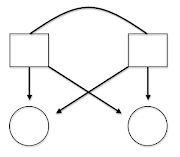
suspenders and square-and-circle diagrams, this young attorney scampers
off into the field of Alternative Dispute Resolution in 2011...
Cut to black. Silence. Nothingness.
The words "...Three Years Later" fade onto the screen with a creeping chill.
At
this point, the audience has assumed that the optimistic protagonist
has died or met some other tragic fate. However, quite the inverse
happened in this case--the optimistic protagonist had assumed that the
audience had died out.
I haven't blogged about co-resolution in
three years, but it wasn't because my efforts to practice and promote
this new process had fizzled out--it was because I thought no one was
reading this blog. But don't worry. You haven't missed out on much.
Trial runs have been continuing since 2012, participant surveys have
demonstrated effectiveness, neutrality, and party-satisfaction with the
process, and I have been invited to speak about these experiences at the
National ACR Conference. Again. 2009 all over again. So, what has
changed?
Apparently, everything.
The full-day training that I
conducted in 2009 ended up with two participants who conducted a few
co-resolution sessions, one participant who--four years
later--consistently refers to the process as "co-mediation," and the
quietly consistent (and consistently quiet) support of Susan Shostak.
Obviously, the effort at that time did not have the stickiness (using
Gladwell's term) that would cause the idea to spread outside of my
direct involvement.
That was then. The full-day training that I
conducted last Friday ended with participants setting up further
meetings to discuss co-resolution (without my suggestion), requesting
further material from me, and pitching the idea to other members of the
ADR community. Looking back at the "Mission Accomplished" optimism I
was expressing a handful of blog posts (and as many years) ago, I don't
want to declare any kind of victory yet. It's just that people are
talking. There is, if anything, more promotional work to be done than
ever before.
So, while I haven't said a lot about it in this
blog over the last three years, a lot can be said about keeping your
nose down and building the ADR-cred of the process and yourself through
regularly-conducted co-resolution sessions (thanks Susan) and through
taking a leadership role in the Ohio Mediation Association (thanks again
Susan).
Or maybe the change was that I turned 30.
3.31.2014

5.12.2011
It must be remembered...
"It must be remembered that there is nothing more difficult to plan, more doubtful of success nor more dangerous to manage than the creation of a new system."
~Niccolo Machiavelli
Though Machiavelli is regarded as a bit of a pessimist, I find the above quotation to be an accurate summary of my experiences with new systems.
~Niccolo Machiavelli
Though Machiavelli is regarded as a bit of a pessimist, I find the above quotation to be an accurate summary of my experiences with new systems.
3.08.2011
Matching Mediator Background to Mediation Style
[Disclaimer: the opinions expressed in this blog post are only my opinions and are not backed by research, as they very well should be]
The world of mediation is mostly simply divided between mediators trained legally and mediators trained in mental health. Currently, both groups tend to share a mediation style in which the mediator is detached, impartial, and facilitates a discussion of the problem until the parties create a solution. I believe that this approach under utilizes the professional skills that are brought to the table by both educational backgrounds.
Before I discuss how both of these skill sets could be better put to practice in mediation, let me first say that I am not a fan of the detached, impartial approach to mediation.
Detached impartiality may make sense for judges and therapists; however, mediators misapply this approach to facilitated dispute resolution. Judges can and should be impartial because they remain separated and above the investigation and because they must make a decision after hearing both sides. Mediators, on the other hand, are actively involved in unearthing the story behind the dispute (and may affect the direction of the process with their inescapably human biases) and, also, do not as much need to be impartial because they do not render a decision. Therapists use a detached what-do-you-think-about-that approach to mental healing because the point is that the patient vent and come to terms with their perceptions and experiences. Dispute resolution, on the other hand, involves two (or more) perspectives clashing in order to arrive at a solution--the parties are not coming in every week to discuss their life-struggles, and also they are actively arguing with each other rather than engaging in self-discovery. For a physical representation of this disconnect, compare the patient laying at ease on a couch to the disputants sitting on opposite sides of a table.
Detached impartiality does not make sense in mediation because the mediator is a human being who is directly facilitating human conflict and cannot remain unbiased. While an overwhelming amount of social scientists are empirically showing that people cannot avoid bias, I do not have the time or resources to pull their research and give it well-deserved citation. I will therefore use myself as an example: "The detached-impartiality style of mediation? Total crap." That just feels natural, trust me.
Anyways, mediators end up using this detached approach to prevent their human biases from affecting the process. However, this limits the mediator's role in the process, effectively allowing them to be replaced with machines that simply ask each party to politely respond to the other party's last point (or at least outsourced overseas). I, and others, argue that mediators should have a more meaningful role in the process, which brings me back to my original point about using the legal and mental health skill sets in mediation.
Attorneys are trained problem-solvers and negotiators. In problem-solving, legal education and practice equip them with necessary tools for creating and analyzing rules, regulatory structures, and effective human systems. These skills could be applied in crafting optimal resolutions to the parties' conflict. This does not mean that the parties will be any less "empowered" to solve their problems. So long as the process is a voluntary negotiation, the parties retain ultimate authority and can use the attorney-mediator's ideas to expand their thinking on possible solutions.
Furthermore, mediators with legal experience can also provide guidance to the parties as experts on negotiation. Many disputants are neither comfortable or knowledgeable with negotiation. And because procedural advice about methods in negotiation does not necessarily advise the parties on the substance of their situation, a mediator should be able to inform disputants of effective negotiation methods without threatening their neutrality. Legally trained mediators should therefore participate in the process as a facilitator and also as an expert on negotiating and crafting agreements that satisfy the parties' conflicting positions in creative and innovative ways.
Mental health mediators are experts on motivation and behavior. And as interpersonal dispute resolution is more active and problem-focused than individual counselling, so too should the mental health professional conducting a conflict be more actively involved in the dispute resolution process. Instead of being passive explorers of the parties' thought-processes, the mental health mediator should act as an active conduit of the parties' perceptions, intentions, and relationship ideas. While internalizing may be effective, in the long run, in bringing individual patients to better perceive and control their lives, parties to a dispute want more in an intermediary than someone who simply asks each side to respond to the other in turn.
Mental health professionals could offer so much more to mediation in terms of knowledge of how and why people fight, and they could apply this to dispute resolution to guide the parties' interaction and educate them on the psychological underpinnings of their dispute with the other side. This would mean shifting the specialty from internal mental health to interactive mental health, using methods of family therapy/couples counselling rather than Freudian therapy.
A concise description of what I am arguing against, on both fronts, is mediation in which the mediator is a detached nobody who basically keeps the parties talking and responding to each other (oh, and who enforces ground rules such as "don't be a jerk"). In contrast to this approach, mediators trained in both law and mental health could offer actual expertise and helpful involvement in the process. Attorney-mediators could offer creative, optimal solutions that satisfy both sides, and mental health mediators could psychoanalyze the parties' interaction (rather than their internal processes) and conduct an exploration/exposition of the perceptions, intentions, and relationship of the disputants at the table.
The world of mediation is mostly simply divided between mediators trained legally and mediators trained in mental health. Currently, both groups tend to share a mediation style in which the mediator is detached, impartial, and facilitates a discussion of the problem until the parties create a solution. I believe that this approach under utilizes the professional skills that are brought to the table by both educational backgrounds.
Before I discuss how both of these skill sets could be better put to practice in mediation, let me first say that I am not a fan of the detached, impartial approach to mediation.
Detached impartiality may make sense for judges and therapists; however, mediators misapply this approach to facilitated dispute resolution. Judges can and should be impartial because they remain separated and above the investigation and because they must make a decision after hearing both sides. Mediators, on the other hand, are actively involved in unearthing the story behind the dispute (and may affect the direction of the process with their inescapably human biases) and, also, do not as much need to be impartial because they do not render a decision. Therapists use a detached what-do-you-think-about-that approach to mental healing because the point is that the patient vent and come to terms with their perceptions and experiences. Dispute resolution, on the other hand, involves two (or more) perspectives clashing in order to arrive at a solution--the parties are not coming in every week to discuss their life-struggles, and also they are actively arguing with each other rather than engaging in self-discovery. For a physical representation of this disconnect, compare the patient laying at ease on a couch to the disputants sitting on opposite sides of a table.
Detached impartiality does not make sense in mediation because the mediator is a human being who is directly facilitating human conflict and cannot remain unbiased. While an overwhelming amount of social scientists are empirically showing that people cannot avoid bias, I do not have the time or resources to pull their research and give it well-deserved citation. I will therefore use myself as an example: "The detached-impartiality style of mediation? Total crap." That just feels natural, trust me.
Anyways, mediators end up using this detached approach to prevent their human biases from affecting the process. However, this limits the mediator's role in the process, effectively allowing them to be replaced with machines that simply ask each party to politely respond to the other party's last point (or at least outsourced overseas). I, and others, argue that mediators should have a more meaningful role in the process, which brings me back to my original point about using the legal and mental health skill sets in mediation.
Attorneys are trained problem-solvers and negotiators. In problem-solving, legal education and practice equip them with necessary tools for creating and analyzing rules, regulatory structures, and effective human systems. These skills could be applied in crafting optimal resolutions to the parties' conflict. This does not mean that the parties will be any less "empowered" to solve their problems. So long as the process is a voluntary negotiation, the parties retain ultimate authority and can use the attorney-mediator's ideas to expand their thinking on possible solutions.
Furthermore, mediators with legal experience can also provide guidance to the parties as experts on negotiation. Many disputants are neither comfortable or knowledgeable with negotiation. And because procedural advice about methods in negotiation does not necessarily advise the parties on the substance of their situation, a mediator should be able to inform disputants of effective negotiation methods without threatening their neutrality. Legally trained mediators should therefore participate in the process as a facilitator and also as an expert on negotiating and crafting agreements that satisfy the parties' conflicting positions in creative and innovative ways.
Mental health mediators are experts on motivation and behavior. And as interpersonal dispute resolution is more active and problem-focused than individual counselling, so too should the mental health professional conducting a conflict be more actively involved in the dispute resolution process. Instead of being passive explorers of the parties' thought-processes, the mental health mediator should act as an active conduit of the parties' perceptions, intentions, and relationship ideas. While internalizing may be effective, in the long run, in bringing individual patients to better perceive and control their lives, parties to a dispute want more in an intermediary than someone who simply asks each side to respond to the other in turn.
Mental health professionals could offer so much more to mediation in terms of knowledge of how and why people fight, and they could apply this to dispute resolution to guide the parties' interaction and educate them on the psychological underpinnings of their dispute with the other side. This would mean shifting the specialty from internal mental health to interactive mental health, using methods of family therapy/couples counselling rather than Freudian therapy.
A concise description of what I am arguing against, on both fronts, is mediation in which the mediator is a detached nobody who basically keeps the parties talking and responding to each other (oh, and who enforces ground rules such as "don't be a jerk"). In contrast to this approach, mediators trained in both law and mental health could offer actual expertise and helpful involvement in the process. Attorney-mediators could offer creative, optimal solutions that satisfy both sides, and mental health mediators could psychoanalyze the parties' interaction (rather than their internal processes) and conduct an exploration/exposition of the perceptions, intentions, and relationship of the disputants at the table.
2.20.2011
Further Ideas: The Interspersed Nation-State System
Another promising idea of mine proposes a system of government that could be an optimal resolution to the Israeli-Palestinian Conflict. This new system, called the Interspersed Nation-State System, allows governments to exist over certain people rather than over certain land. This means the state would tax and regulate its nationals, rather than tax and regulate everything that happens within certain borders (which is how the international system currently works).
By shifting the locus of sovereignty (how the state delineates its power) from land to people, two nation-states would be able to exist in a shared region. Citizens of each state would have an independent government that tailors policies and public services to its nationals and would also have free movement over 100% of the disputed land. Let me state that again--two states would exist, and citizens of both states would have freedom of movement and full access to the shared homeland.
As applied to Israel and Palestine, citizens of each state would be able to live on the same street, Israelis would pay taxes to the Israeli government and send their children to Israeli schools, Palestinians would pay taxes to the Palestinian government and send their children to Palestinian schools. Police officers would enforce the laws of their separate states, would protect their own nationals, and in cases in which a citizen of one state commits a crime against a citizen of the other state, the victim's state would extradite the offender pursuant to the extradition treaty. Infrastructure would be handled by territorial local government, meaning that citizens of both states would participate in local decision-making, but also that this would handle non-political, shared resources such as roads and sewers.
The workings of this system are better and more-thoroughly explained in the most recent issue of The Middle East Journal (visit www.mei.edu). While the idea of two governments sharing land may sound more optimistic than realistic, my research indicates that the territory-based state is an outdated concept that is not designed to address modern conditions. In fact, the history of the territorial state (created in the 1600s) and the rise of nationalism (in the 1900s) indicate that the shift in sovereignty that I am proposing is the natural progression and is already occurring to some extent.
In conclusion, the Interspersed Nation-State System resolves problems that occur when distinct nations of people occupy one shared land and, therefore, are unable to satisfactorily divide up their spheres of influence with territorial state structures.
By shifting the locus of sovereignty (how the state delineates its power) from land to people, two nation-states would be able to exist in a shared region. Citizens of each state would have an independent government that tailors policies and public services to its nationals and would also have free movement over 100% of the disputed land. Let me state that again--two states would exist, and citizens of both states would have freedom of movement and full access to the shared homeland.
As applied to Israel and Palestine, citizens of each state would be able to live on the same street, Israelis would pay taxes to the Israeli government and send their children to Israeli schools, Palestinians would pay taxes to the Palestinian government and send their children to Palestinian schools. Police officers would enforce the laws of their separate states, would protect their own nationals, and in cases in which a citizen of one state commits a crime against a citizen of the other state, the victim's state would extradite the offender pursuant to the extradition treaty. Infrastructure would be handled by territorial local government, meaning that citizens of both states would participate in local decision-making, but also that this would handle non-political, shared resources such as roads and sewers.
The workings of this system are better and more-thoroughly explained in the most recent issue of The Middle East Journal (visit www.mei.edu). While the idea of two governments sharing land may sound more optimistic than realistic, my research indicates that the territory-based state is an outdated concept that is not designed to address modern conditions. In fact, the history of the territorial state (created in the 1600s) and the rise of nationalism (in the 1900s) indicate that the shift in sovereignty that I am proposing is the natural progression and is already occurring to some extent.
In conclusion, the Interspersed Nation-State System resolves problems that occur when distinct nations of people occupy one shared land and, therefore, are unable to satisfactorily divide up their spheres of influence with territorial state structures.
2.09.2011
Further Ideas in Dispute Resolution: Consensus Arbitration
Allow me to depart from this blog's normal practice of blogging about co-resolution ONLY and then not blogging about anything for months at a time. More specifically, allow me to introduce you to consensus arbitration.
Consensus arbitration is a process in which the agreed-to arbitrator of the dispute does not write the award in isolation, but rather brings the parties together to discuss the shape of the award. The arbitrator would use his/her decision-making ability to guide the discussion (authoritatively, if necessary), but would otherwise act as a mediator. This would allow the parties to have a say in the specifics of the award and would allow the arbitrator to retain the ability to issue a final and binding decision.
This process is held out as the more natural and effective form of arbitration.
Under current arbitration practices, arbitrators imitate judges (by writing the award in isolation) even though their powers and functions are significantly different. Judges disseminate societal laws and norms upon everyone and, therefore, must be decisive and infallible. Also, judges preside over a completely thorough search for the Truth and, as a result, must weigh all admissible evidence in making a decision.
Arbitrators are different. Arbitrators are the predetermined resolvers of specific disputes between the parties and are described by the U.S. Supreme Court as an extension of the parties' negotiation or relationship--by entering into an arbitration agreement, the parties are presumed to have accepted, in advance, the arbitrator's decision, and the arbitrator is tasked with interpreting what the parties agreed to. Also, arbitrators preside over a more efficient/less thorough process and cannot be thought of as weighing as much evidence as a judge in rendering a decision. Finally, arbitrators are often chosen by both parties and, therefore, have incentive to appease both sides (whereas a judge is kept completely independent of the parties).
Thus, by imitating completely-decisive judges, arbitrators tend to render their own conceptions of acceptable compromises without consulting the parties. Instead, I argue, arbitrators should use their position as agreed-upon interpreter of the parties' agreement/negotiated relationship/best interests to act as a mediator who has the ability to render a decision.
To do this, the arbitrator would hear each side present their case (exactly as they normally do), but then, instead of withdrawing to write the award, would bring the parties together and mediate an agreement. And instead of acting as a detached, impartial mediator, the arbitrator would inform the parties of what he/she would be likely and not likely to put in an award, thereby guiding the parties to negotiate on the variables. This allows the arbitrator to retain influence and the final say, but also allows the parties to compromise and negotiate an acceptable resolution.
This process presents benefits of increased party satisfaction through control of/influence over the process. So why haven't arbitrators been doing this? Well, as it turns out, what I am describing as consensus arbitration used to be the normal method by which arbitrators render decisions. Prior to the acceptance of arbitration by the Courts in early-twentieth century American jurisprudence, arbitrators were described as a "mediator with a stick"--a person who consulted and advised the parties while retaining the ability to issue a decision. The change to a more legalistic, judge-like process occurred as the result of problems with enforcement of the arbitrator's private decision. However, today the Federal Arbitration Act and Steelworker's Trilogy (A New Hope, The Supreme Court Strikes Back, and Return of the Steelworkers) arbitration awards are fully enforceable and rarely overturned by state or federal courts.
Therefore, there is no longer anything preventing arbitrators from returning to their more natural, negotiated process. For further information on this process, read my article in Negotiation Journal (vol. 26 no. 3) or come hear my talk at the 2011 Fordham Law Conference on International Arbitration and Mediation. May the force (of arbitrators' decision-making power) be with you.
Consensus arbitration is a process in which the agreed-to arbitrator of the dispute does not write the award in isolation, but rather brings the parties together to discuss the shape of the award. The arbitrator would use his/her decision-making ability to guide the discussion (authoritatively, if necessary), but would otherwise act as a mediator. This would allow the parties to have a say in the specifics of the award and would allow the arbitrator to retain the ability to issue a final and binding decision.
This process is held out as the more natural and effective form of arbitration.
Under current arbitration practices, arbitrators imitate judges (by writing the award in isolation) even though their powers and functions are significantly different. Judges disseminate societal laws and norms upon everyone and, therefore, must be decisive and infallible. Also, judges preside over a completely thorough search for the Truth and, as a result, must weigh all admissible evidence in making a decision.
Arbitrators are different. Arbitrators are the predetermined resolvers of specific disputes between the parties and are described by the U.S. Supreme Court as an extension of the parties' negotiation or relationship--by entering into an arbitration agreement, the parties are presumed to have accepted, in advance, the arbitrator's decision, and the arbitrator is tasked with interpreting what the parties agreed to. Also, arbitrators preside over a more efficient/less thorough process and cannot be thought of as weighing as much evidence as a judge in rendering a decision. Finally, arbitrators are often chosen by both parties and, therefore, have incentive to appease both sides (whereas a judge is kept completely independent of the parties).
Thus, by imitating completely-decisive judges, arbitrators tend to render their own conceptions of acceptable compromises without consulting the parties. Instead, I argue, arbitrators should use their position as agreed-upon interpreter of the parties' agreement/negotiated relationship/best interests to act as a mediator who has the ability to render a decision.
To do this, the arbitrator would hear each side present their case (exactly as they normally do), but then, instead of withdrawing to write the award, would bring the parties together and mediate an agreement. And instead of acting as a detached, impartial mediator, the arbitrator would inform the parties of what he/she would be likely and not likely to put in an award, thereby guiding the parties to negotiate on the variables. This allows the arbitrator to retain influence and the final say, but also allows the parties to compromise and negotiate an acceptable resolution.
This process presents benefits of increased party satisfaction through control of/influence over the process. So why haven't arbitrators been doing this? Well, as it turns out, what I am describing as consensus arbitration used to be the normal method by which arbitrators render decisions. Prior to the acceptance of arbitration by the Courts in early-twentieth century American jurisprudence, arbitrators were described as a "mediator with a stick"--a person who consulted and advised the parties while retaining the ability to issue a decision. The change to a more legalistic, judge-like process occurred as the result of problems with enforcement of the arbitrator's private decision. However, today the Federal Arbitration Act and Steelworker's Trilogy (A New Hope, The Supreme Court Strikes Back, and Return of the Steelworkers) arbitration awards are fully enforceable and rarely overturned by state or federal courts.
Therefore, there is no longer anything preventing arbitrators from returning to their more natural, negotiated process. For further information on this process, read my article in Negotiation Journal (vol. 26 no. 3) or come hear my talk at the 2011 Fordham Law Conference on International Arbitration and Mediation. May the force (of arbitrators' decision-making power) be with you.
9.12.2010
First Report of the Ohio Co-resolution Project
Following the first Co-resolution Training, held in November of 2009, three highly-experienced mediators volunteered their time to conduct trial runs of co-resolution in real disputes. Susan Shostak and Randy Fisher took five cases through Marya Kolman's domestic mediation program in Columbus, and Margaret Miller and I took one case through Margaret's program in Chillicothe. The overall outcome of these efforts was educational and, for the most part, very supportive.
Susan and Randy
By surveying participants Randy and Susan found that (1) the parties always highly satisfied with their own co-resolver, (2) parties generally trusted the co-resolver on the other side, (3) parties all found the overall process to be neutral, and (4) parties were largely satisfied with the process overall. By supporting their separate parties in a fair and neutral process, without much in the way of practice with the co-resolution process, Susan and Randy have therefore demonstrated that co-resolution can work.
However, by also applying the process to different situations, Randy and Susan also learned a number of things about co-resolution. First, co-resolution is not for everyone--two parties that are not able to negotiate (to exchange ideas and solutions) will not be able to co-resolve. Co-resolution works to provide direct assistance and regulation to parties as they negotiate, but this level of support adds nothing without party participation. Also, co-resolution assistance can only go so far. Parties that need help at the negotiation table will benefit from co-resolution; however, parties that require direct assistance in their daily interactions with each other need ongoing support (a parent-coordinator or attorney). While most parties benefited from co-resolution--and one case that did not settle in mediation settled in co-resolution--there were situations that were inappropriate for either co-resolution or mediation.
As to their perceptions of the process, Susan and Randy are both non-attorney mediators, and this is important because co-resolution allows ADR professionals to play somewhat of an advocate. Randy and Susan both felt that they had rapport with their assigned party--that the parties largely seemed to appreciate the personal attention and coaching, and that the co-resolvers could challenge their own party when they were acting unreasonable. They further noted that the parties modeled their behavior on Randy and Susan's interaction with each other, and that communication flowed well around the table.
The process was, however, not without complaints. Susan and Randy indicated that they tended to fall back on their mediator-instincts, rendering the process a clone of co-mediation. By not acting as cooperative negotiators or advocates, the process became unnecessary complicated and duplicative, with the parties telling their stories to separate co-resolvers in the initial caucus and then again in the four-way session. Also, while co-resolution offers the parties coaching in conflict resolution skills, many parties want resolution more than a learning experience (the lesson here is that co-resolution is not strictly "conflict coaching + mediation"--the co-resolvers need to help the parties negotiate rather than teach them and then act as detached facilitators). Another learning experience was that, while Randy and Susan have been long term friends and co-workers, they have different mediation styles and this led to different approaches to co-resolution, which should be a balanced, symmetrical process. Despite these difficulties, Susan and Randy found value in the process and felt that it does work (I was glad that they didn't crash and burn).
Margaret and Nate
Margaret and I used co-resolution on one complex custody case that took 8 1/2 hours to resolve over the course of two sessions. One of the first observations we made afterwards is that co-resolution is not as mentally exhausting on the ADR professional as mediation--our first session was 5 1/2 hours of negotiation, and both of us felt fine at the end. This may occur because mediation requires the ADR professional to move back and forth between the parties' conflicting perceptions (while maintaining neutrality). Co-resolution, on the other hand, allowed each of us to focus on one party and use the common orientation of the co-resolvers and their balanced interaction to guide both parties in the same positive direction. Overall, Margaret felt that the process went very well and that the case would likely not have settled in mediation.
While it may be difficult for me to objectively observe the process while participating in it, I felt that it was advantageous that Margaret and I both had experience as attorneys. Co-resolution is all about enforcing positive behaviors between conflicting negotiators, and may therefore come more naturally to people who have experience negotiating.
As for other news about the Ohio Co-resolution Project: Randy, Margaret, and I presented co-resolution at the 2010 Association for Conflict Resolution national conference in Chicago. I hear that our evaluations were very positive. Currently, Susan and Randy are signing up to do more cases through Marya's program, and all five of us (including Marya) are going to do more training/discussing/role-playing to better understand the co-resolution process. More updates as events unfold.
Susan and Randy
By surveying participants Randy and Susan found that (1) the parties always highly satisfied with their own co-resolver, (2) parties generally trusted the co-resolver on the other side, (3) parties all found the overall process to be neutral, and (4) parties were largely satisfied with the process overall. By supporting their separate parties in a fair and neutral process, without much in the way of practice with the co-resolution process, Susan and Randy have therefore demonstrated that co-resolution can work.
However, by also applying the process to different situations, Randy and Susan also learned a number of things about co-resolution. First, co-resolution is not for everyone--two parties that are not able to negotiate (to exchange ideas and solutions) will not be able to co-resolve. Co-resolution works to provide direct assistance and regulation to parties as they negotiate, but this level of support adds nothing without party participation. Also, co-resolution assistance can only go so far. Parties that need help at the negotiation table will benefit from co-resolution; however, parties that require direct assistance in their daily interactions with each other need ongoing support (a parent-coordinator or attorney). While most parties benefited from co-resolution--and one case that did not settle in mediation settled in co-resolution--there were situations that were inappropriate for either co-resolution or mediation.
As to their perceptions of the process, Susan and Randy are both non-attorney mediators, and this is important because co-resolution allows ADR professionals to play somewhat of an advocate. Randy and Susan both felt that they had rapport with their assigned party--that the parties largely seemed to appreciate the personal attention and coaching, and that the co-resolvers could challenge their own party when they were acting unreasonable. They further noted that the parties modeled their behavior on Randy and Susan's interaction with each other, and that communication flowed well around the table.
The process was, however, not without complaints. Susan and Randy indicated that they tended to fall back on their mediator-instincts, rendering the process a clone of co-mediation. By not acting as cooperative negotiators or advocates, the process became unnecessary complicated and duplicative, with the parties telling their stories to separate co-resolvers in the initial caucus and then again in the four-way session. Also, while co-resolution offers the parties coaching in conflict resolution skills, many parties want resolution more than a learning experience (the lesson here is that co-resolution is not strictly "conflict coaching + mediation"--the co-resolvers need to help the parties negotiate rather than teach them and then act as detached facilitators). Another learning experience was that, while Randy and Susan have been long term friends and co-workers, they have different mediation styles and this led to different approaches to co-resolution, which should be a balanced, symmetrical process. Despite these difficulties, Susan and Randy found value in the process and felt that it does work (I was glad that they didn't crash and burn).
Margaret and Nate
Margaret and I used co-resolution on one complex custody case that took 8 1/2 hours to resolve over the course of two sessions. One of the first observations we made afterwards is that co-resolution is not as mentally exhausting on the ADR professional as mediation--our first session was 5 1/2 hours of negotiation, and both of us felt fine at the end. This may occur because mediation requires the ADR professional to move back and forth between the parties' conflicting perceptions (while maintaining neutrality). Co-resolution, on the other hand, allowed each of us to focus on one party and use the common orientation of the co-resolvers and their balanced interaction to guide both parties in the same positive direction. Overall, Margaret felt that the process went very well and that the case would likely not have settled in mediation.
While it may be difficult for me to objectively observe the process while participating in it, I felt that it was advantageous that Margaret and I both had experience as attorneys. Co-resolution is all about enforcing positive behaviors between conflicting negotiators, and may therefore come more naturally to people who have experience negotiating.
As for other news about the Ohio Co-resolution Project: Randy, Margaret, and I presented co-resolution at the 2010 Association for Conflict Resolution national conference in Chicago. I hear that our evaluations were very positive. Currently, Susan and Randy are signing up to do more cases through Marya's program, and all five of us (including Marya) are going to do more training/discussing/role-playing to better understand the co-resolution process. More updates as events unfold.
5.22.2010
From Theory to Practice: Credit Where Credit's Due
Over the last year, I "went public" with the co-resolution idea. While developing this dispute resolution process was a great experience and presenting it to academics yielded curiosity and positive attention, trying to get the broader ADR community to apply co-resolution in real disputes has been . . . difficult (said through gritted teeth).
However, being that I'm only one relatively-inexperienced practitioner, I was not able to carry out this, the most Herculean phase of the project. Bringing co-resolution from theory to practice has therefore fallen on a few brave mediators, to whom I offer my most sincere gratitude. They are:
Susan Shostak: Susan was one of the first people to attend my Free Info Sessions on co-resolution last fall (which was nice because, most of the time, nobody attended). She expressed interest in applying co-resolution and even mentioned that she had a long-time friend who was a fellow mediator and potential partner in co-resolution. Being that a long-term relationship between the negotiators is key to co-resolution, this sounded ideal and was probably the best news I had heard in months. However, beyond being in an ideal place to apply co-resolution, Susan has been one of the most stalwart supporters of co-resolution, and a highly-discerning mind in how the process should be applied. Her ability to get things organized and ease my mind has been invaluable.
Randy Fisher: Randy is Susan's friend and will be her partner in the first American trial runs of co-resolution. I met Randy at the 2009 ACR Conference when he approached me just before my session to say that he would attend the November training in Columbus instead of the talk I was about to give. My next contact from Randy was a phone call as I was driving into Columbus on the morning of the training, asking if there were still any spots left. Randy has been incredibly enthusiastic about co-resolution and has made important suggestions about how the concept is presented (he even directed me with helpful questions during the November training). I therefore expect that he will be an asset as a trainer and proponent of co-resolution.
Marya Kolman: Marya is an important figure in ADR in general as the director of mediation programs in the Franklin County Courts and as an organizer of ACR's annual conference. Recently, she became of singular importance to co-resolution by being the first court administrator to approve trial runs of the process in court-connected cases. Randy and Susan deserve some extra thanks here for convincing Marya to take this step.
Margaret Honore Miller: Like Susan and Randy, Margaret was in attendance at the first co-resolution training session and, afterwards, signed up for further action in implementing the co-resolution process. Margaret has been very supportive of my efforts, but has hit a few snags in gaining approval for trial runs of the process. Despite this, her energy and input merit recognition and gratitude. Also, her theory on how co-resolution should fit into the Uniform Mediation Act may lead to a divergent school of thought on conceptualizing co-resolution.
Eric Bonfield: Eric is quite possibly the first and most important practitioner of co-resolution, and yet he only recently came to my attention. I'm currently getting the details about this, but Eric is the VP and Mediation Chair for the teacher's union in Surrey, British Columbia (B.C.'s largest school district with 5,500 teachers), who was struggling with using mediation as a labor relations tool. As a result, when my CRQ article on co-resolution came out, he began implementing the process immediately. Mr. Bonfield reports back the following outcomes:
However, being that I'm only one relatively-inexperienced practitioner, I was not able to carry out this, the most Herculean phase of the project. Bringing co-resolution from theory to practice has therefore fallen on a few brave mediators, to whom I offer my most sincere gratitude. They are:
Susan Shostak: Susan was one of the first people to attend my Free Info Sessions on co-resolution last fall (which was nice because, most of the time, nobody attended). She expressed interest in applying co-resolution and even mentioned that she had a long-time friend who was a fellow mediator and potential partner in co-resolution. Being that a long-term relationship between the negotiators is key to co-resolution, this sounded ideal and was probably the best news I had heard in months. However, beyond being in an ideal place to apply co-resolution, Susan has been one of the most stalwart supporters of co-resolution, and a highly-discerning mind in how the process should be applied. Her ability to get things organized and ease my mind has been invaluable.
Randy Fisher: Randy is Susan's friend and will be her partner in the first American trial runs of co-resolution. I met Randy at the 2009 ACR Conference when he approached me just before my session to say that he would attend the November training in Columbus instead of the talk I was about to give. My next contact from Randy was a phone call as I was driving into Columbus on the morning of the training, asking if there were still any spots left. Randy has been incredibly enthusiastic about co-resolution and has made important suggestions about how the concept is presented (he even directed me with helpful questions during the November training). I therefore expect that he will be an asset as a trainer and proponent of co-resolution.
Marya Kolman: Marya is an important figure in ADR in general as the director of mediation programs in the Franklin County Courts and as an organizer of ACR's annual conference. Recently, she became of singular importance to co-resolution by being the first court administrator to approve trial runs of the process in court-connected cases. Randy and Susan deserve some extra thanks here for convincing Marya to take this step.
Margaret Honore Miller: Like Susan and Randy, Margaret was in attendance at the first co-resolution training session and, afterwards, signed up for further action in implementing the co-resolution process. Margaret has been very supportive of my efforts, but has hit a few snags in gaining approval for trial runs of the process. Despite this, her energy and input merit recognition and gratitude. Also, her theory on how co-resolution should fit into the Uniform Mediation Act may lead to a divergent school of thought on conceptualizing co-resolution.
Eric Bonfield: Eric is quite possibly the first and most important practitioner of co-resolution, and yet he only recently came to my attention. I'm currently getting the details about this, but Eric is the VP and Mediation Chair for the teacher's union in Surrey, British Columbia (B.C.'s largest school district with 5,500 teachers), who was struggling with using mediation as a labor relations tool. As a result, when my CRQ article on co-resolution came out, he began implementing the process immediately. Mr. Bonfield reports back the following outcomes:
- That the co-resolution model is a smashing success as a labor relations tool,
- That it has produced negotiated agreements in conflicts between principals and entire staffs, between groups within teachers' unions, and between individual employees,
- That HR for the district is restructuring its dispute resolution around co-resolution, hiring on a full time labor relations attorney to act as a co-resolver,
- That co-resolution has created more immediate response through early settlement of disputes and is therefore expected to reduce the number of arbitrations,
- That co-resolution effectively overcomes the competition-cooperation dilemma, which normally favors competition, as described in dominant negotiation theory,
- And that the momentum behind co-resolution is building.
This is, to my knowledge, the most extensive application of co-resolution, and I'm thrilled to hear about its success. Based on my difficulty bringing co-resolution to practice and what I've read and know about the grueling demands of innovation, I can only imagine that Mr. Bonfield has expended unmatched energy and risk in convincing a large, complex organization to adopt and regularly use co-resolution. I am therefore deeply indebted to Mr. Bonfield and wish him continued luck in negotiating with co-resolution.
5.19.2010
Attention Potential Co-resolvers: I Don't Bite
If years of rejection and blank stares have taught me anything, it's that no one will actually apply co-resolution to real disputes just because I describe it to them. When I first came up with co-resolution, I thought that the case for it was so strong and obvious that members of the ADR community would try it out once they heard about it. When this simple and stupid dream was crushed, I accepted that I was going to have to assist with the first trial runs of co-resolution and that, years later, people would go back and read these blog posts.
Well, apparently there's no end to how wrong I can be. I recently received word that a school district in British Columbia began using co-resolution in labor disputes shortly after my article came out and that it is reportedly very successful.
Before I publish further details about this little milagro (hopefully soon), let me throw something out there. While I hold registered copyrights on co-resolution, I did not patent the process and I do not intend to profit from other people using it. So if there is anyone else out there that is using co-resolution, please contact me at coresolution.adr@gmail.com. I am speaking at the next ACR Conference and would gladly share your story.
Well, apparently there's no end to how wrong I can be. I recently received word that a school district in British Columbia began using co-resolution in labor disputes shortly after my article came out and that it is reportedly very successful.
Before I publish further details about this little milagro (hopefully soon), let me throw something out there. While I hold registered copyrights on co-resolution, I did not patent the process and I do not intend to profit from other people using it. So if there is anyone else out there that is using co-resolution, please contact me at coresolution.adr@gmail.com. I am speaking at the next ACR Conference and would gladly share your story.
5.18.2010
Mediation: Both Effective and Unsatisfying
Conflict Resolution Quarterly recently printed an article in which it was shown, through rigorous quantitative analysis, that mediation is able to bridge emotional understanding between parties and that the process is, regardless, unsatisfying.
The article, "Exploring the Role of Emotion in Conflict Transformation," was written by Jameson et al and was published in the recent winter issue. In order to explore emotion in dispute resolution processes, the authors' study compared the emotional affect (how the parties felt about each other) before and after mediation and negotiation.
The hypothesis was that parties in mediation (as compared to negotiation) would feel greater empathy for each other, feel less animosity, feel that their concerns were addressed, and have a higher level of satisfaction. Basically, the study would demonstrate that mediation is better than negotiation because it is able to address emotion.
What the study found, however, was both counter intuitive (to the authors) and supportive of co-resolution theory. While the parties in mediation reported having more positive and less negative emotion, the parties in negotiation experienced higher satisfaction with the process. So, unless they masochistically prefer negative emotions, the parties preferred to negotiate rather than act through an intermediary.
The reason that this study would support co-resolution over mediation is that co-resolution impacts party participation by guiding it in positive directions rather than passing it through an intermediary. Co-resolution uses two negotiation coaches that reliably promote principled negotiation behaviors. In comparison, a single mediator has control of the process and acts as a filter in restraining certain behaviors in the negotiating parties. While the mediator's overall impact may improve party participation, neither party should feel that the mediator is supporting or enhancing their participation (because this would violate neutrality).
So mediation primarily works by restraining the parties, and co-resolution primarily works by enhancing the parties.
First, a quick note on how co-resolution is able to do this (it's more complicated than just employing two ADR professionals). Unlike any other dispute resolution process, co-resolution employs partisan negotiators (co-resolvers) who work against each other as advocates/coaches for opposing parties, but work together as ongoing partners in a single dispute resolution service. Under this unique tension, the co-resolvers have a controlling incentive to act amicably and cooperatively (because their working relationship is on the line), but must also loyally support separate parties (because either party can fire both co-resolvers by merely walking away from the negotiation). As a result, the parties get loyal negotiation coaches that will enhance their performance in the negotiation, but only in positive, interest-based directions.
Thus, co-resolution achieves the same outcome as mediation--bringing the parties to use productive, Getting-to-Yes negotiation methods--but does so through personal, partisan assistance rather than the control of a neutral, detached third party. In reaction to the results of the above study, I would therefore predict that co-resolution would be able to achieve the transformative, emotion-focused effects of mediation while also producing the satisfaction found in negotiating without an intermediary.
The article, "Exploring the Role of Emotion in Conflict Transformation," was written by Jameson et al and was published in the recent winter issue. In order to explore emotion in dispute resolution processes, the authors' study compared the emotional affect (how the parties felt about each other) before and after mediation and negotiation.
The hypothesis was that parties in mediation (as compared to negotiation) would feel greater empathy for each other, feel less animosity, feel that their concerns were addressed, and have a higher level of satisfaction. Basically, the study would demonstrate that mediation is better than negotiation because it is able to address emotion.
What the study found, however, was both counter intuitive (to the authors) and supportive of co-resolution theory. While the parties in mediation reported having more positive and less negative emotion, the parties in negotiation experienced higher satisfaction with the process. So, unless they masochistically prefer negative emotions, the parties preferred to negotiate rather than act through an intermediary.
The reason that this study would support co-resolution over mediation is that co-resolution impacts party participation by guiding it in positive directions rather than passing it through an intermediary. Co-resolution uses two negotiation coaches that reliably promote principled negotiation behaviors. In comparison, a single mediator has control of the process and acts as a filter in restraining certain behaviors in the negotiating parties. While the mediator's overall impact may improve party participation, neither party should feel that the mediator is supporting or enhancing their participation (because this would violate neutrality).
So mediation primarily works by restraining the parties, and co-resolution primarily works by enhancing the parties.
First, a quick note on how co-resolution is able to do this (it's more complicated than just employing two ADR professionals). Unlike any other dispute resolution process, co-resolution employs partisan negotiators (co-resolvers) who work against each other as advocates/coaches for opposing parties, but work together as ongoing partners in a single dispute resolution service. Under this unique tension, the co-resolvers have a controlling incentive to act amicably and cooperatively (because their working relationship is on the line), but must also loyally support separate parties (because either party can fire both co-resolvers by merely walking away from the negotiation). As a result, the parties get loyal negotiation coaches that will enhance their performance in the negotiation, but only in positive, interest-based directions.
Thus, co-resolution achieves the same outcome as mediation--bringing the parties to use productive, Getting-to-Yes negotiation methods--but does so through personal, partisan assistance rather than the control of a neutral, detached third party. In reaction to the results of the above study, I would therefore predict that co-resolution would be able to achieve the transformative, emotion-focused effects of mediation while also producing the satisfaction found in negotiating without an intermediary.
2.06.2010
Report from the First Co-resolution Training and Introducing the Ohio Co-resolution Project
The other thing that was absorbing my attention since my last blogging spurt was the first ever training in co-resolution.
After my failed attempt in July to organize a co-resolution event, I am happy to report that on November 13th, 2009, eight members of the central Ohio ADR community gathered to spend the better part of the day learning about and training in co-resolution. The attendees included mediators in private practice, leaders of court-connected and agency-connected mediation programs, mediators for non-profit groups, and graduates of masters level ADR programs.
Following four hours of lecture/discussion and two hours of role-playing, this is what the attendees had to say about co-resolution:
"This process brings out the best in people."
"This may be a brilliant master stroke that will impact the entire field...couldn't have come at a better time"
"The role plays were a real turning point in understanding the process."
"I had some serious doubts...I am leaving the training feeling that Co-Resolution has some significant promise to advancing ADR goals."
In my reaction to these reactions, let me say that I did predict that people would see the value of this process. I hypothesized that once parties were able to both feel protected (because they have the personal attention of a negotiation coach) and trust the other side (because the opposing coach cannot promote competitive negotiation tactics), then the parties would be able to follow their higher selves instead of engaging in an attack-and-defend approach to negotiation.
However, I did not predict that the role plays would be such an effective educational tool. The attendees were able to comprehend my arguments and listen patiently as I lectured on the co-resolution concept, but they were only able to truly soak up and grasp the idea once they had applied it in role plays. Acting as either the co-resolvers or the parties, they were able to experience the dynamics at play in co-resolution and arrive at insights and interpretations of their own.
So with all evaluation sheets rating the co-resolution concept and the training itself at 5 out of 5, I declare that this endeavor was a success. However, more than just reaffirming the value of the co-resolution concept, this training produced something that I've been hoping for for years...
Shortly after the training, I sent out an email to the participants inviting their further support and initiative in putting co-resolution into practice. And in response, I found three people who seem to have the courage, creativity, initiative, and wisdom to try out a new dispute resolution process.
More details as events unfold.
After my failed attempt in July to organize a co-resolution event, I am happy to report that on November 13th, 2009, eight members of the central Ohio ADR community gathered to spend the better part of the day learning about and training in co-resolution. The attendees included mediators in private practice, leaders of court-connected and agency-connected mediation programs, mediators for non-profit groups, and graduates of masters level ADR programs.
Following four hours of lecture/discussion and two hours of role-playing, this is what the attendees had to say about co-resolution:
"This process brings out the best in people."
"This may be a brilliant master stroke that will impact the entire field...couldn't have come at a better time"
"The role plays were a real turning point in understanding the process."
"I had some serious doubts...I am leaving the training feeling that Co-Resolution has some significant promise to advancing ADR goals."
In my reaction to these reactions, let me say that I did predict that people would see the value of this process. I hypothesized that once parties were able to both feel protected (because they have the personal attention of a negotiation coach) and trust the other side (because the opposing coach cannot promote competitive negotiation tactics), then the parties would be able to follow their higher selves instead of engaging in an attack-and-defend approach to negotiation.
However, I did not predict that the role plays would be such an effective educational tool. The attendees were able to comprehend my arguments and listen patiently as I lectured on the co-resolution concept, but they were only able to truly soak up and grasp the idea once they had applied it in role plays. Acting as either the co-resolvers or the parties, they were able to experience the dynamics at play in co-resolution and arrive at insights and interpretations of their own.
So with all evaluation sheets rating the co-resolution concept and the training itself at 5 out of 5, I declare that this endeavor was a success. However, more than just reaffirming the value of the co-resolution concept, this training produced something that I've been hoping for for years...
Shortly after the training, I sent out an email to the participants inviting their further support and initiative in putting co-resolution into practice. And in response, I found three people who seem to have the courage, creativity, initiative, and wisdom to try out a new dispute resolution process.
More details as events unfold.
Subscribe to:
Posts (Atom)

 Posts
Posts

